
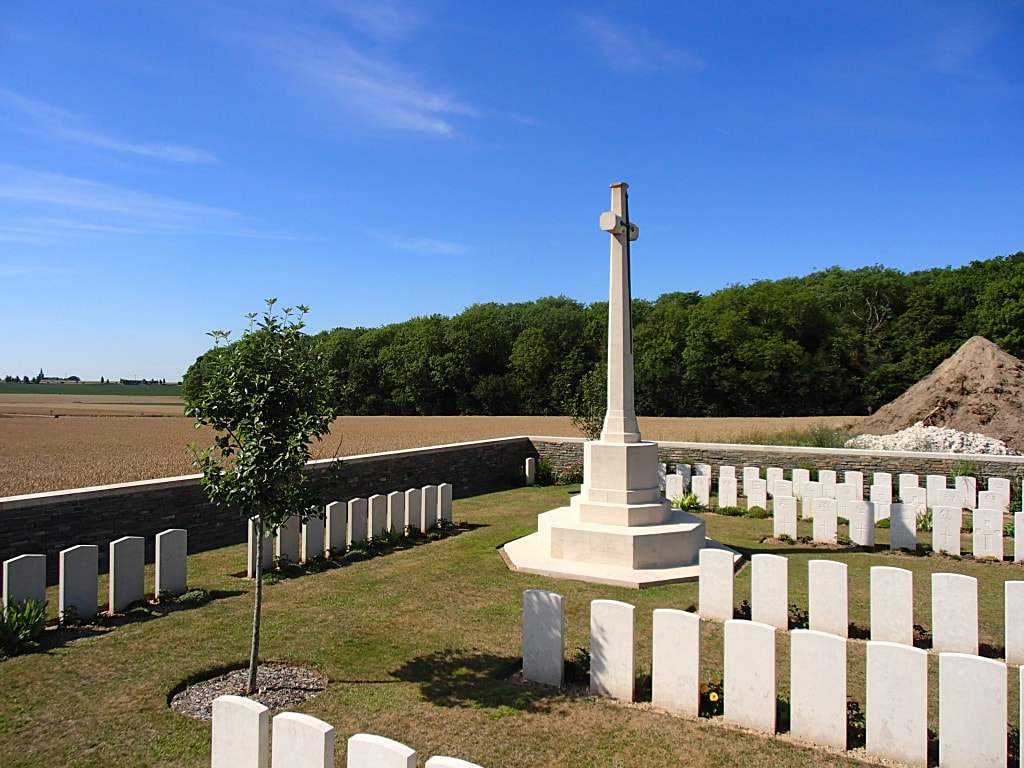
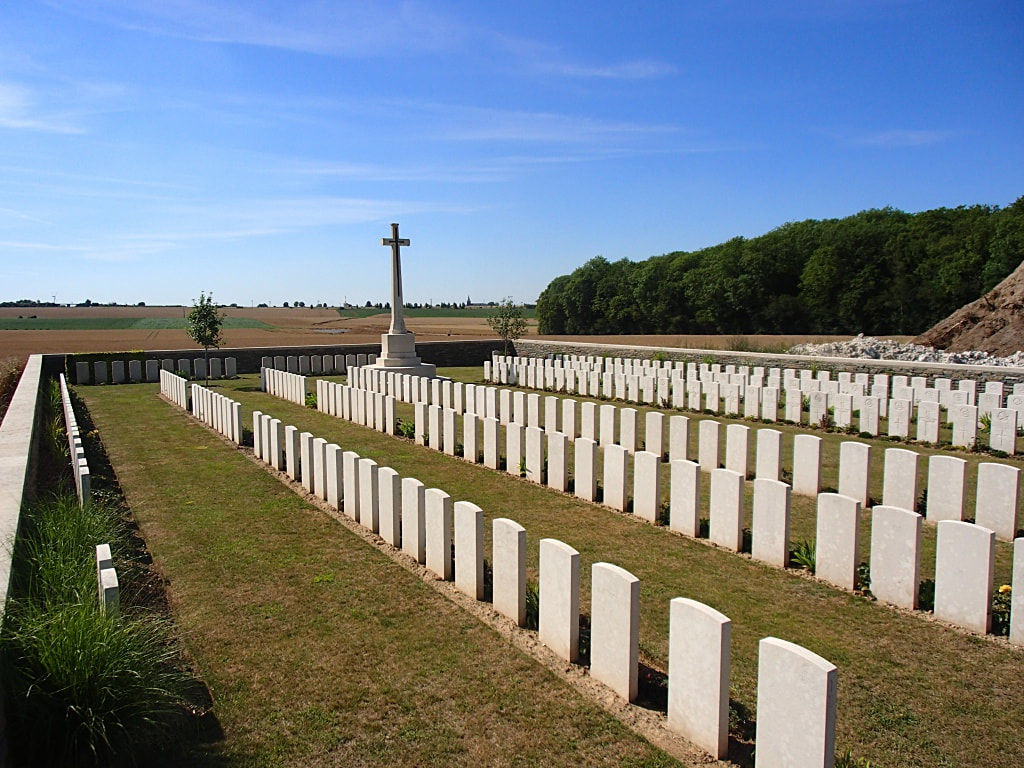
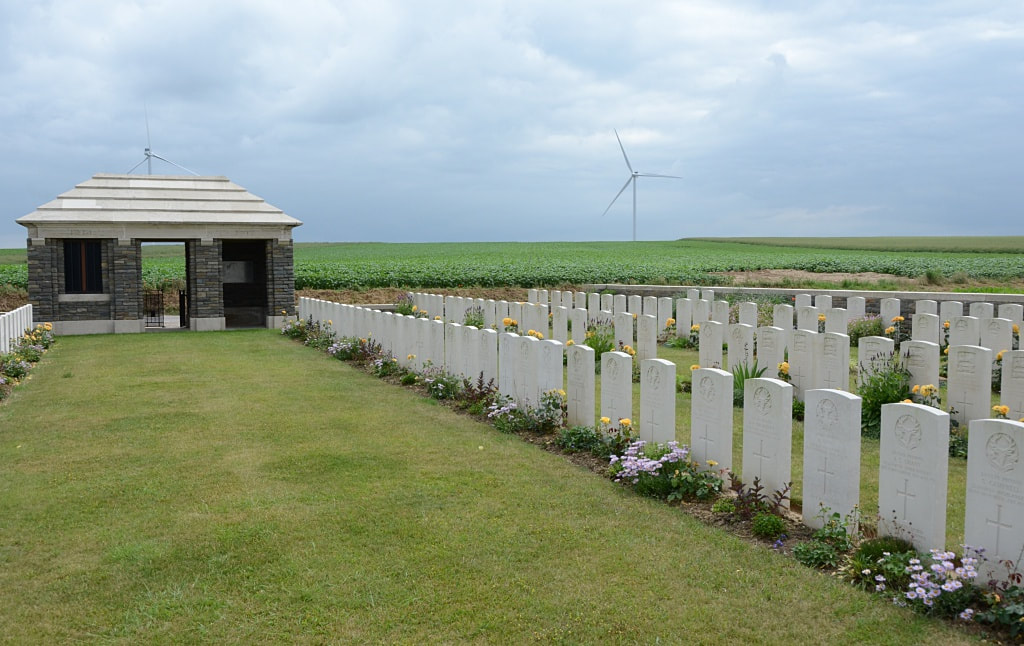
ORIVAL WOOD BRITISH CEMETERY
Flesquières
Nord
France
Location Information
Flesquières is a village approximately 5 kilometres south-west of Cambrai and about 5 kilometres south of the main road (N30) from Cambrai to Bapaume.
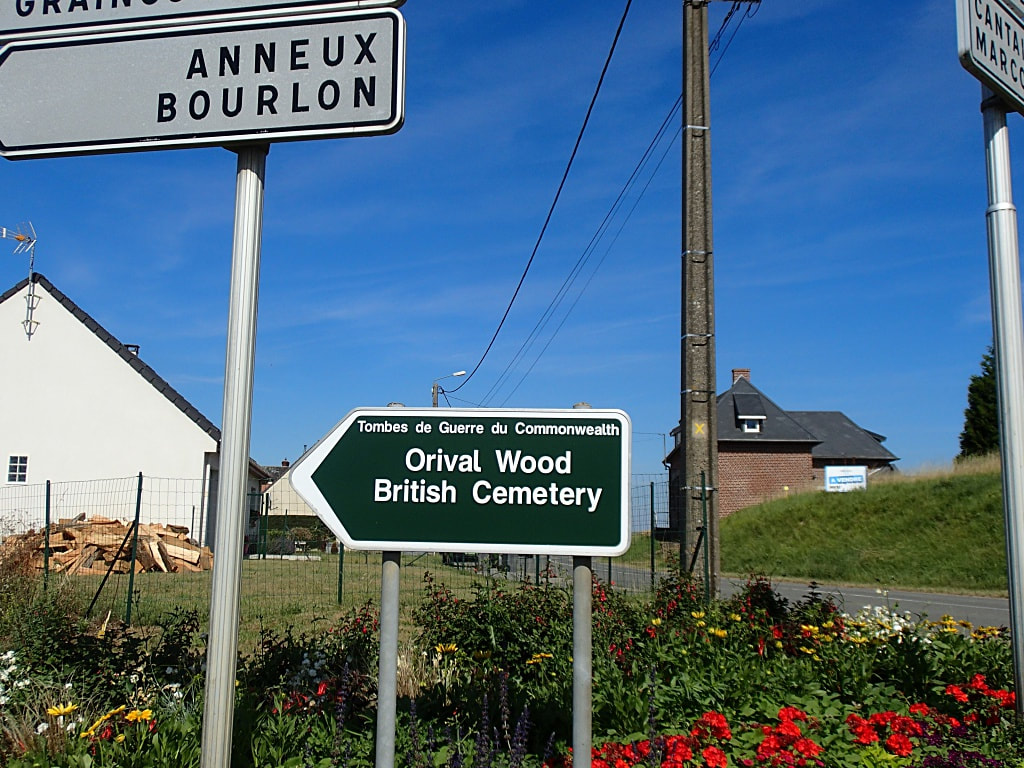
From the village of Flequières take the Cantaing road, D92, to its junction with the D89 (opposite Flesquieres Hill British Cemetery), where the first CWGC sign is situated. The Cemetery lies on the left side of this road, the D89, 800 metres from the junction.
Historical Information
Flesquières was attacked by the 51st (Highland) Division, with tanks, on the 20th November 1917, in the battle of Cambrai, but held for a time by a German officer with a few men; it was captured on the 21st. It was lost in the late stages of the battle, and retaken on the 27th September 1918, by the 3rd Division.
The Bois d'Orival is a small wood on the road from Flesquieres to Fontaine-Notre Dame, cleared by the 2nd Grenadier Guards on the 27th September 1918. The Cemetery was begun in November 1917, during the Battle of Cambrai; used again in September-October 1918; and enlarged in 1930 by the transfer of graves from the following cemeteries:-
The 51st DIVISION CEMETERY, FLESQUIERES, was almost 1 kilometre South of Flesquieres on a sunken track running to the railway line and on towards Havrincourt. It was made by the Divisional Burial Officer, and it contained the graves of 74 officers and men of the 51st (Highland) Division and the Tank Corps, who fell in the last eleven days of November 1917.
FLESQUIÈRES CHATEAU CEMETERY was near the Havrincourt road and just outside the Chateau grounds. It was used by fighting units from November 1917, to March 1918 ; for one burial in September 1918; and for the burial of a Chinese labourer in February 1919. It contained, in all, 135 graves.
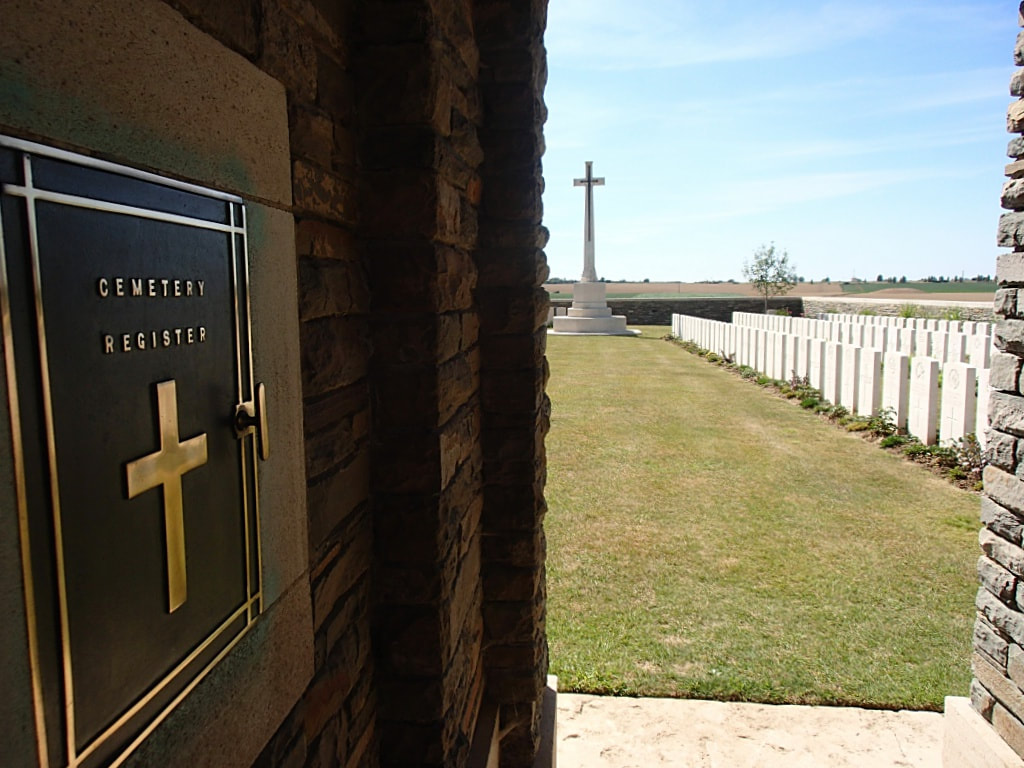
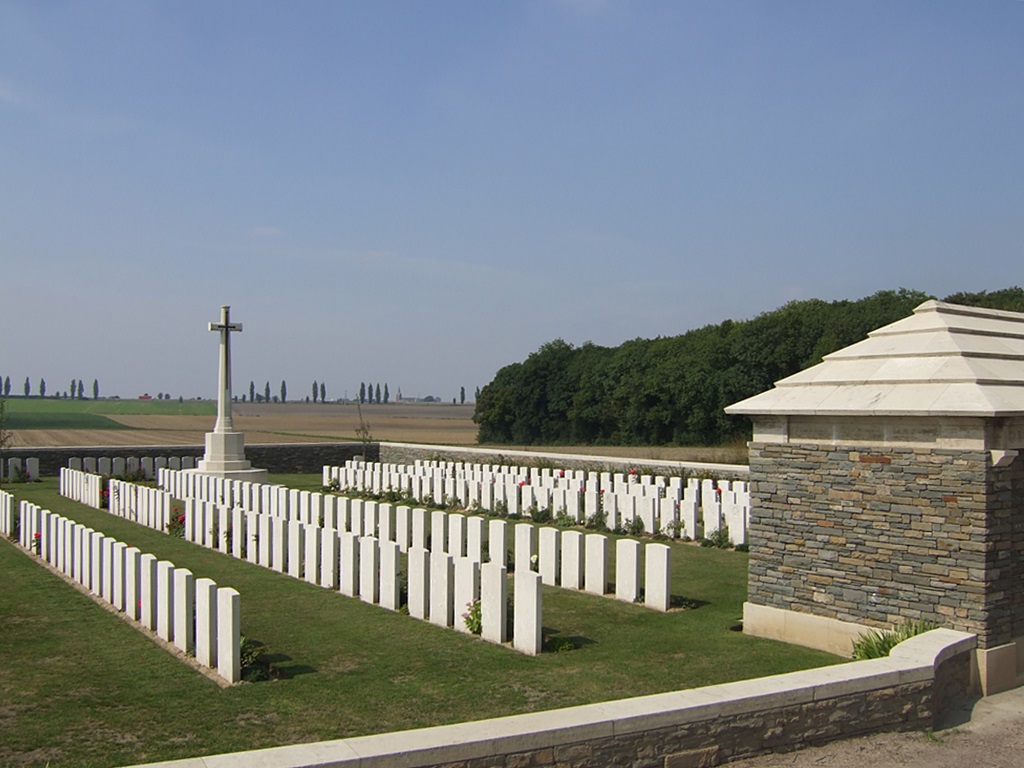
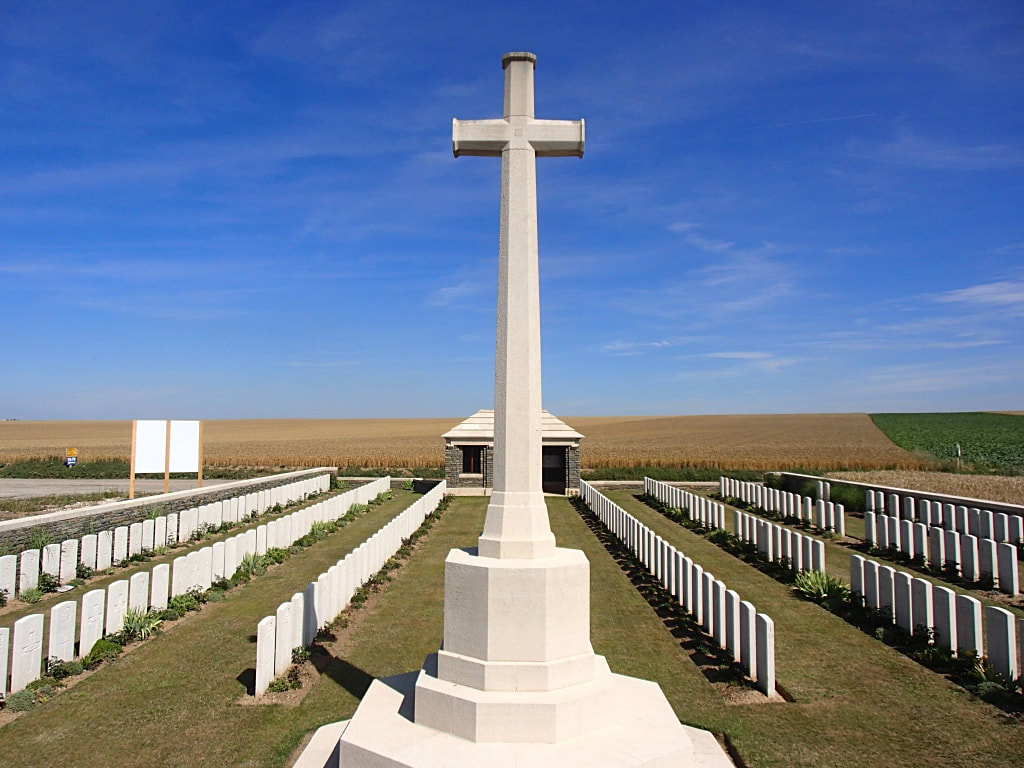
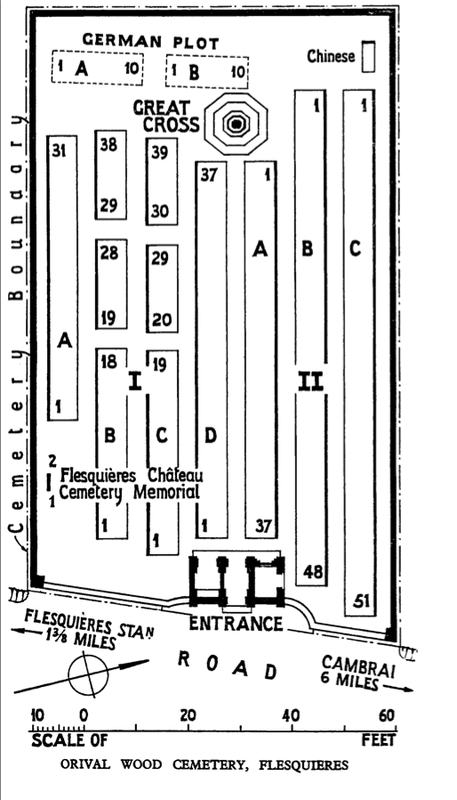
There are now nearly 300, 1914-18 war casualties commemorated in this site. Of these, ten are unidentified and others, identified collectively but not individually, are marked by headstones bearing the superscription, "Buried near this spot". Special memorials record the names of two United Kingdom soldiers, buried in Flesquieres Chateau Cemetery, whose graves could not be found. There are also 20 German burials here.
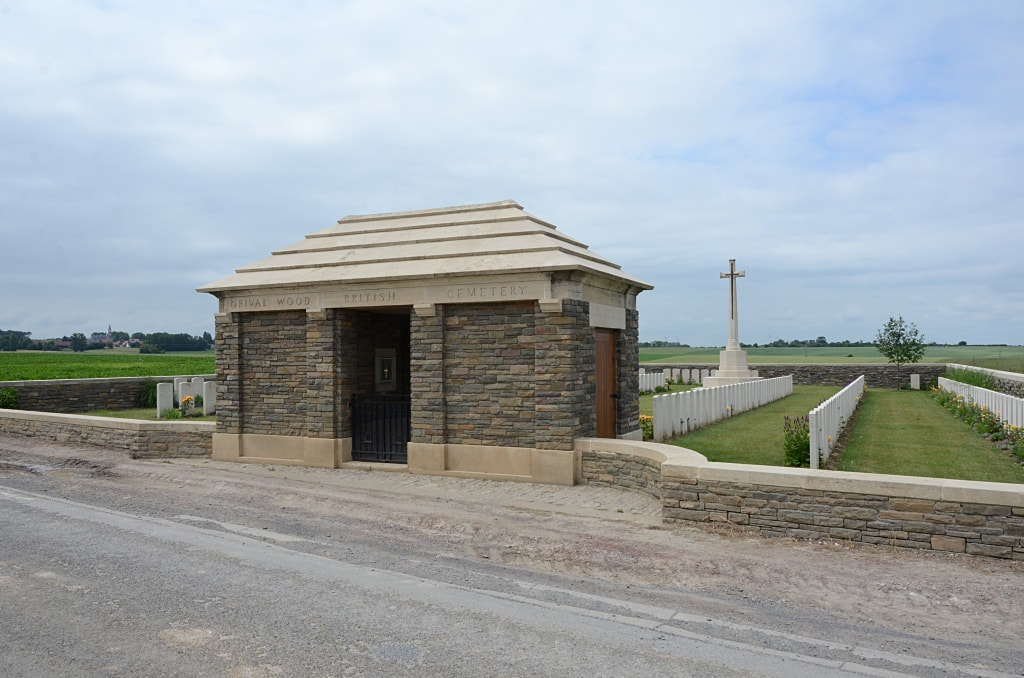
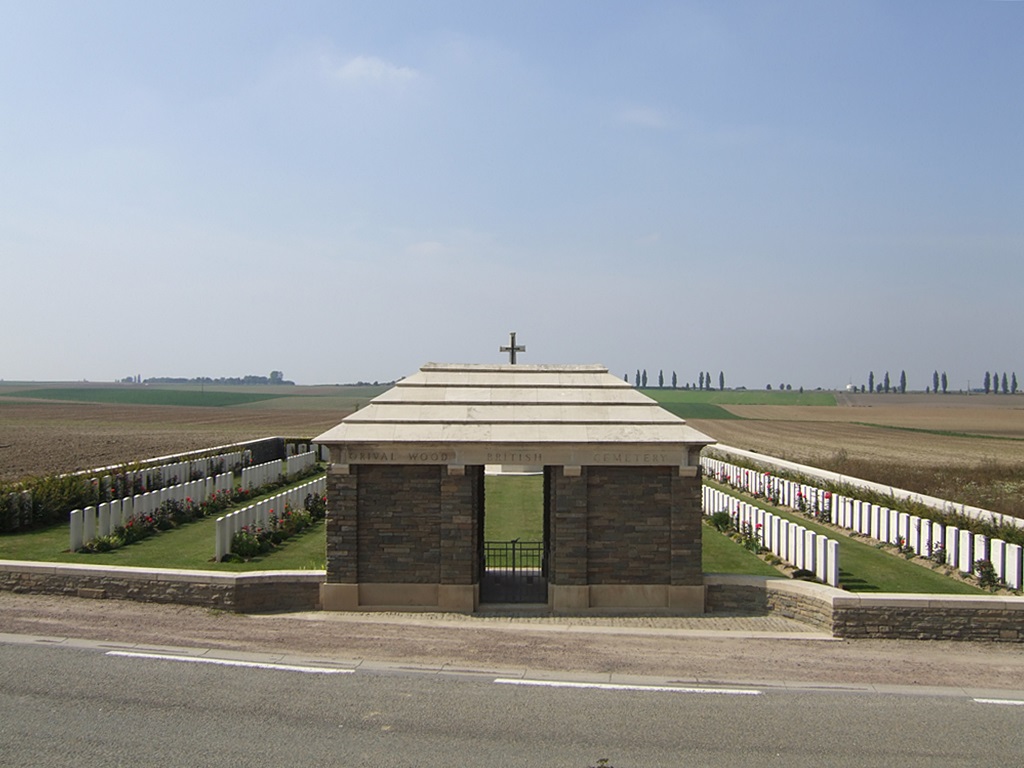
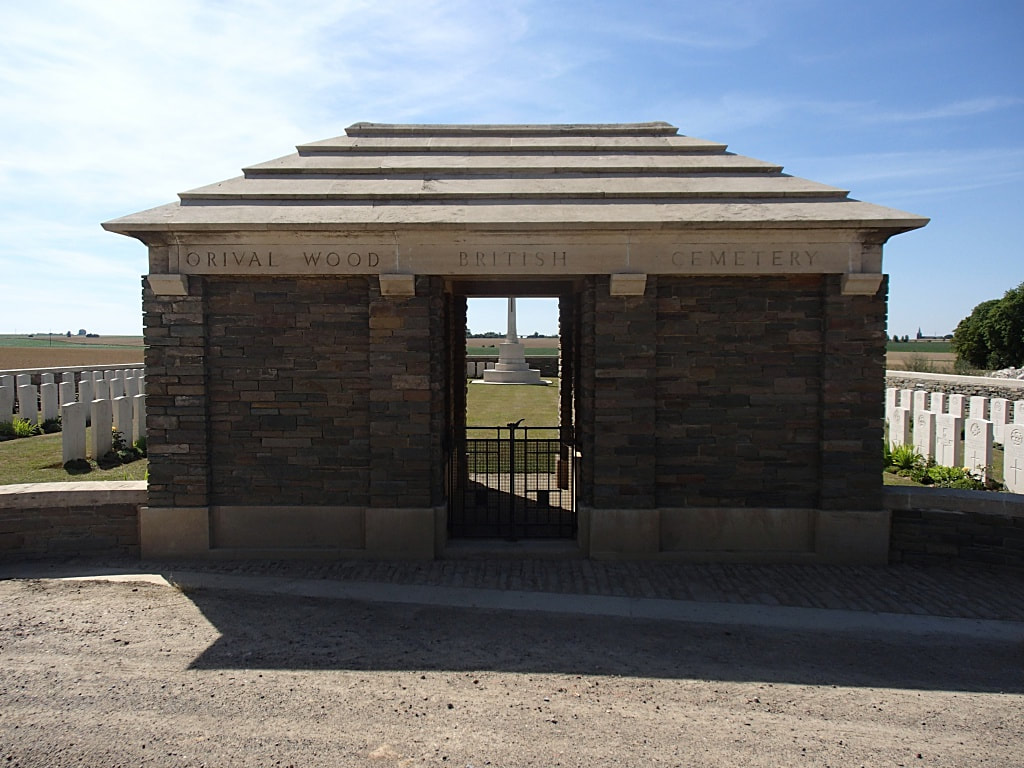
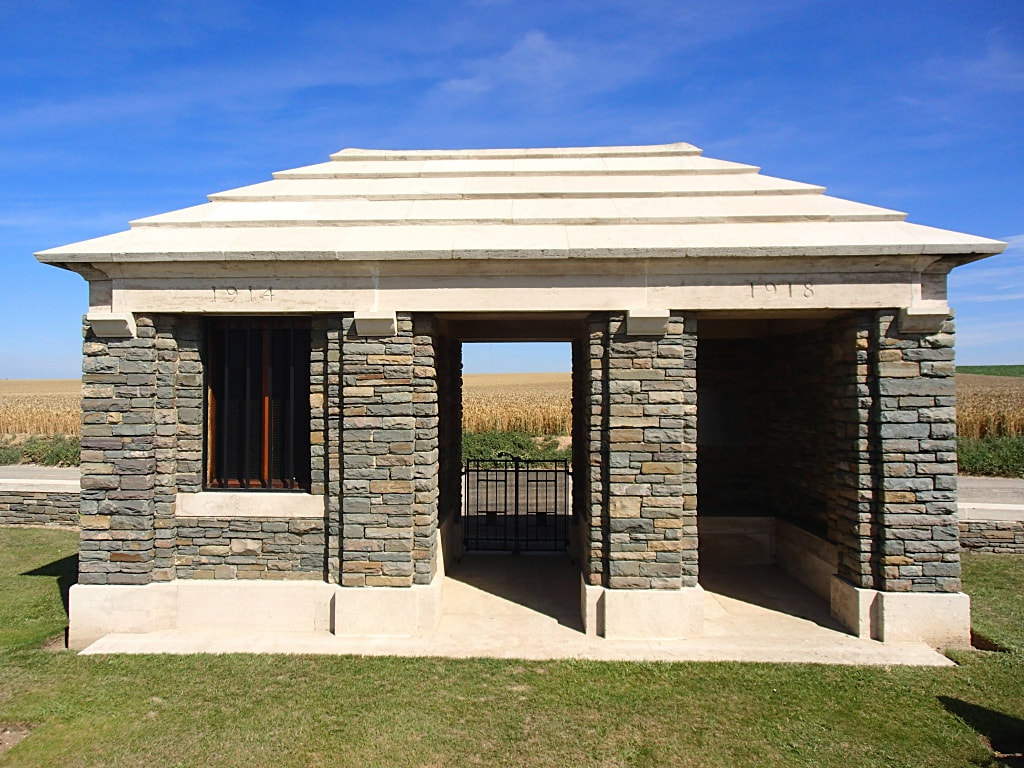
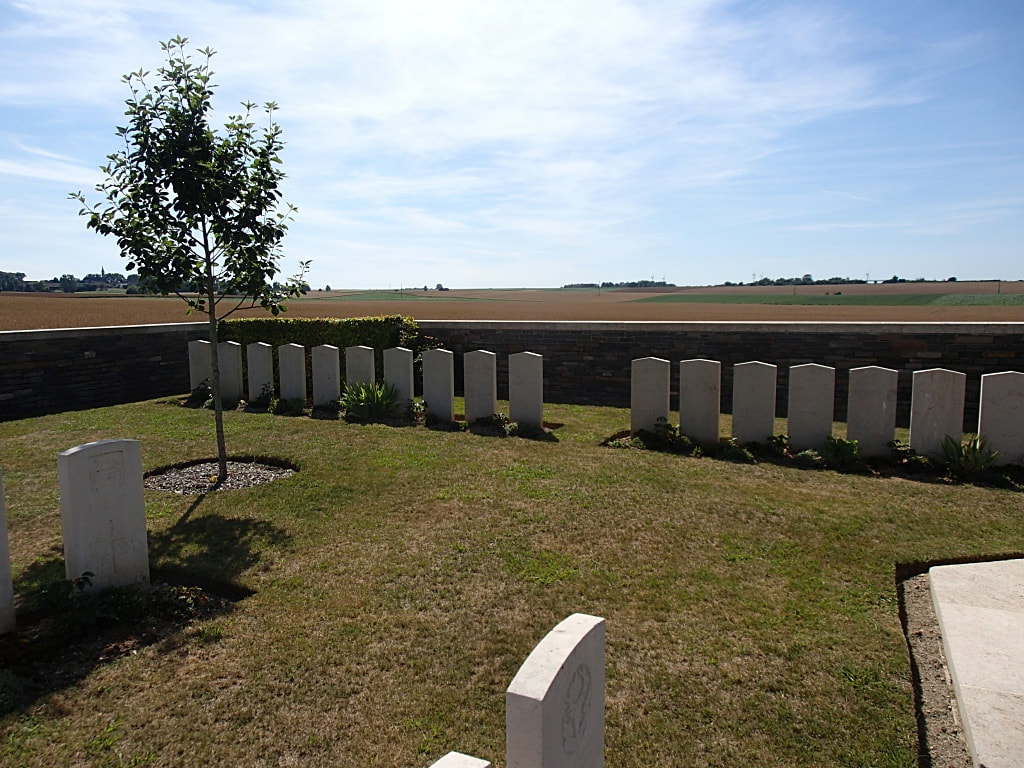
The cemetery covers an area of 794 square metres and is enclosed by a stone rubble wall.
Casualty Details: UK 284, Germany 20, Total Burials: 304.
Flesquières is a village approximately 5 kilometres south-west of Cambrai and about 5 kilometres south of the main road (N30) from Cambrai to Bapaume.
From the village of Flequières take the Cantaing road, D92, to its junction with the D89 (opposite Flesquieres Hill British Cemetery), where the first CWGC sign is situated. The Cemetery lies on the left side of this road, the D89, 800 metres from the junction.
Historical Information
Flesquières was attacked by the 51st (Highland) Division, with tanks, on the 20th November 1917, in the battle of Cambrai, but held for a time by a German officer with a few men; it was captured on the 21st. It was lost in the late stages of the battle, and retaken on the 27th September 1918, by the 3rd Division.
The Bois d'Orival is a small wood on the road from Flesquieres to Fontaine-Notre Dame, cleared by the 2nd Grenadier Guards on the 27th September 1918. The Cemetery was begun in November 1917, during the Battle of Cambrai; used again in September-October 1918; and enlarged in 1930 by the transfer of graves from the following cemeteries:-
The 51st DIVISION CEMETERY, FLESQUIERES, was almost 1 kilometre South of Flesquieres on a sunken track running to the railway line and on towards Havrincourt. It was made by the Divisional Burial Officer, and it contained the graves of 74 officers and men of the 51st (Highland) Division and the Tank Corps, who fell in the last eleven days of November 1917.
FLESQUIÈRES CHATEAU CEMETERY was near the Havrincourt road and just outside the Chateau grounds. It was used by fighting units from November 1917, to March 1918 ; for one burial in September 1918; and for the burial of a Chinese labourer in February 1919. It contained, in all, 135 graves.
There are now nearly 300, 1914-18 war casualties commemorated in this site. Of these, ten are unidentified and others, identified collectively but not individually, are marked by headstones bearing the superscription, "Buried near this spot". Special memorials record the names of two United Kingdom soldiers, buried in Flesquieres Chateau Cemetery, whose graves could not be found. There are also 20 German burials here.
The cemetery covers an area of 794 square metres and is enclosed by a stone rubble wall.
Casualty Details: UK 284, Germany 20, Total Burials: 304.




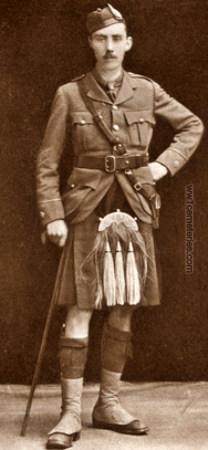
Lieutenant
Ewart Alan MacKintosh, M. C.
5th Bn. Seaforth Highlanders
21st November 1917, aged 24.
Plot I. A. 26.
A noted war poet, his poems "A Highland Regiment" and "War, The Liberator" were published in 1917 and 1918 respectively.
Ewart Alan MacKintosh, M. C.
5th Bn. Seaforth Highlanders
21st November 1917, aged 24.
Plot I. A. 26.
A noted war poet, his poems "A Highland Regiment" and "War, The Liberator" were published in 1917 and 1918 respectively.
|
On Vimy Ridge
By Ewart Alan Mackintosh On Vimy Ridge four months ago We lived and fought, my friends and I, And watched the kindly dawn come slow, Peace bringing from the eastern sky. Now I sit in a quiet town Remembering how I used to go Among the dug-outs up and down, On Vimy Ridge four months ago. And often sitting here I've seen, As then I saw them every night, The friendly faces tired and keen Across the flickering candle-light, And heard their laughter gay and clear, And watched the fires of courage glow Above the scattered ash of fear, On Vimy Ridge four months ago. Oh, friends of mine, where are you now? Somewhere beneath the troubled sky, With earth above the quiet brow, Reader and Stalk for ever lie. But dead or living out or here I see the friends I used to know, And hear the laughter gay and clear, On Vimy Ridge four months ago. |
In No Man's Land
By Ewart Alan Mackintosh The hedge on the left, and the trench on the right, And the whispering, rustling wood between, And who knows where in the wood to-night Death or capture may lurk unseen. The open field and the figures lying Under the shade of the apple trees -- Is it the wind in the branches sighing. Or a German trying to stop a sneeze ? Louder the voices of night come thronging, But over them all the sound is clear. Taking me back to the place of my longing And the cultured sneezes I used to hear. Lecture-time and my tutor's ' handkerchief ' Stopping his period's rounded close, Like the frozen hand of the German ranker Down in a ditch with a cold in his nose. I'm cold, too, and a stealthy snuffle From the man with a pistol covering me, And the Bosche moving off with a snap and a shuffle Break the windows of memory -- I can't make sure till the moon gets lighter -- Anyway shooting is over bold. Oh, damn you, get back to your trench, you blighter, I really can't shoot a man with a cold. |
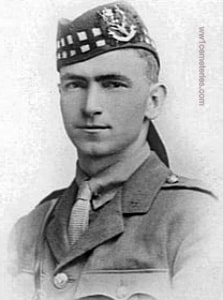
Second Lieutenant
Frank Thompson Aitken
6th Bn. Seaforth Highlanders
20th November 1917.
Plot I. C. 18.
Frank Thompson Aitken
6th Bn. Seaforth Highlanders
20th November 1917.
Plot I. C. 18.
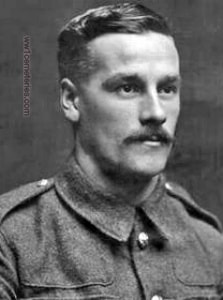
42501 Lance Corporal
Howard Percy Arnold
75th Field Coy. Royal Engineers
28th November 1917.
Plot II. A. 14.
Husband of L. Arnold, of 22, Euston Rd., Far Cotton, Northampton.
Howard Percy Arnold
75th Field Coy. Royal Engineers
28th November 1917.
Plot II. A. 14.
Husband of L. Arnold, of 22, Euston Rd., Far Cotton, Northampton.
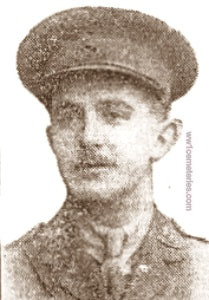
Captain
Bernard Stewart Atkinson
2nd/6th Bn. South Staffordshire Regiment
30th November 1917, aged 24.
Plot II. C. 18.
Son of Etheldred St. Barbe Atkinson, of Weardale, Newbridge, Wolverhampton, and the late Herbert Llewellyn Atkinson. Educated at Denstone College, Staffs. Passed Final Law Exam. Nov., 1914.
His headstone bears the inscription; "Mine Honour Is My Life... In That I Live And For That Will I Die" Shakespeare"
Bernard Stewart Atkinson
2nd/6th Bn. South Staffordshire Regiment
30th November 1917, aged 24.
Plot II. C. 18.
Son of Etheldred St. Barbe Atkinson, of Weardale, Newbridge, Wolverhampton, and the late Herbert Llewellyn Atkinson. Educated at Denstone College, Staffs. Passed Final Law Exam. Nov., 1914.
His headstone bears the inscription; "Mine Honour Is My Life... In That I Live And For That Will I Die" Shakespeare"
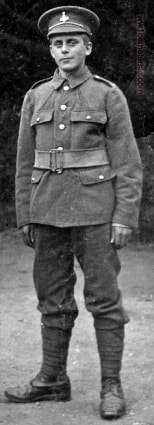
63872 Private
Benjamin Billings
8th Bn. West Yorkshire Regiment (Prince of Wales's Own)
29th September 1918.
Plot I. C. 32.
Benjamin Billings
8th Bn. West Yorkshire Regiment (Prince of Wales's Own)
29th September 1918.
Plot I. C. 32.
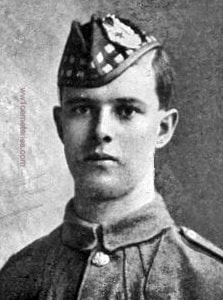
291226 Private
Laurence John Cooper
7th Bn. Gordon Highlanders
20th November 1917, aged 20.
Plot I. B. 3.
Son of John Cooper, of Flett St., Lerwick, Shetland.
His headstone bears the inscription; "Beloved Son Of John Cooper, Flett St. Lerwick."
Laurence John Cooper
7th Bn. Gordon Highlanders
20th November 1917, aged 20.
Plot I. B. 3.
Son of John Cooper, of Flett St., Lerwick, Shetland.
His headstone bears the inscription; "Beloved Son Of John Cooper, Flett St. Lerwick."
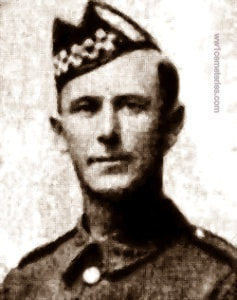
S/8948 Serjeant
James Flett, D. C. M.
14th Bn. Argyll and Sutherland Highlanders
25th November 1917, aged 29.
Plot II. C. 43.
Son of Alfred and Margaret Crawford Flett. Native of Greenock.
James Flett, D. C. M.
14th Bn. Argyll and Sutherland Highlanders
25th November 1917, aged 29.
Plot II. C. 43.
Son of Alfred and Margaret Crawford Flett. Native of Greenock.
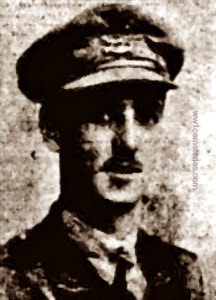
Lieutenant
Raymond Harkness
119th Coy. Machine Gun Corps (Infantry)
23rd November 1918, aged 29.
Plot I. A. 31.
Son of Raymond Harkness, of Hoylake, Cheshire, and the late Hannah Harkness.
His headstone bears the inscription; "Greater Love Hath No Man."
Raymond Harkness
119th Coy. Machine Gun Corps (Infantry)
23rd November 1918, aged 29.
Plot I. A. 31.
Son of Raymond Harkness, of Hoylake, Cheshire, and the late Hannah Harkness.
His headstone bears the inscription; "Greater Love Hath No Man."
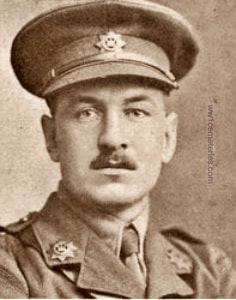
Captain
Cecil Otway Reid Jacob
3rd Bn. Devonshire Regiment, attd. 2nd/5th Bn. Lincolnshire Regiment
29th November 1918.
Plot II. A. 21.
Cecil Otway Reid Jacob
3rd Bn. Devonshire Regiment, attd. 2nd/5th Bn. Lincolnshire Regiment
29th November 1918.
Plot II. A. 21.
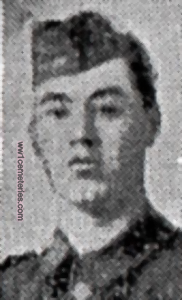
203015 Private
Peter McAnerney
1st/4th Bn. Seaforth Highlanders
23rd November 1917.
Plot I. A. 23.
Peter McAnerney
1st/4th Bn. Seaforth Highlanders
23rd November 1917.
Plot I. A. 23.
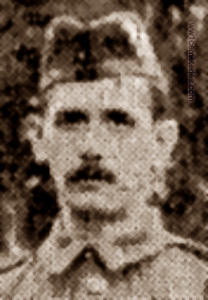
11091 Private
Robert McFarlane
7th Bn. Black Watch (Royal Highlanders)
23rd November 1917.
Plot I. A. 3.
Robert McFarlane
7th Bn. Black Watch (Royal Highlanders)
23rd November 1917.
Plot I. A. 3.
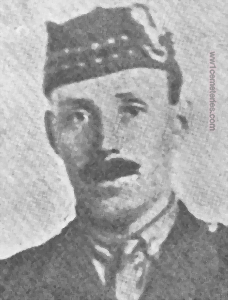
Second Lieutenant
Angus McLeod
4th Bn. Seaforth Highlanders
20th November 1917, aged 37.
Plot I. C. 7.
Son of Alexander and Cristina McLeod; husband of the late Elizabeth Cumberland McLeod, of 302, Crow Rd., Partick, Glasgow. Born at Stornaway.
Angus McLeod
4th Bn. Seaforth Highlanders
20th November 1917, aged 37.
Plot I. C. 7.
Son of Alexander and Cristina McLeod; husband of the late Elizabeth Cumberland McLeod, of 302, Crow Rd., Partick, Glasgow. Born at Stornaway.
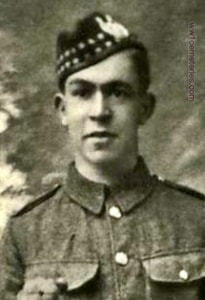
S/15295 Private
George Melvin
1st/7th Bn. Gordon Highlanders
20th November 1917.
Plot II. C. 42.
George Melvin
1st/7th Bn. Gordon Highlanders
20th November 1917.
Plot II. C. 42.
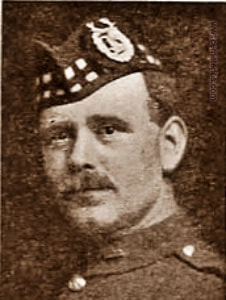
Captain
George Minty
6th Bn. Gordon Highlanders
23rd November 1917, aged 37.
Plot I. A. 4.
Son of the late Mr. and Mrs. George Minty; husband of Norah Cooper Minty, of "Blinkbonny," 120, Middlefield Place, Woodside, Aberdeen. Born at Old Deer, Aberdeenshire.
His headstone bears the inscription; "Qui Ante Diem Periit Sed Miles, Sed Pro Patria." (Loosely translates to: Who died in a far off land before his time, but as a soldier and for his country.)
George Minty
6th Bn. Gordon Highlanders
23rd November 1917, aged 37.
Plot I. A. 4.
Son of the late Mr. and Mrs. George Minty; husband of Norah Cooper Minty, of "Blinkbonny," 120, Middlefield Place, Woodside, Aberdeen. Born at Old Deer, Aberdeenshire.
His headstone bears the inscription; "Qui Ante Diem Periit Sed Miles, Sed Pro Patria." (Loosely translates to: Who died in a far off land before his time, but as a soldier and for his country.)
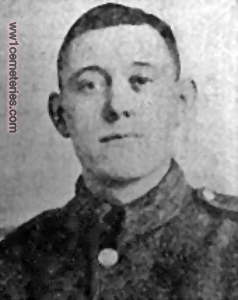
41812 Private
Charles Wheeler
2nd Bn. South Staffordshire Regiment
27th September 1918.
Plot I. C. 30.
Charles Wheeler
2nd Bn. South Staffordshire Regiment
27th September 1918.
Plot I. C. 30.
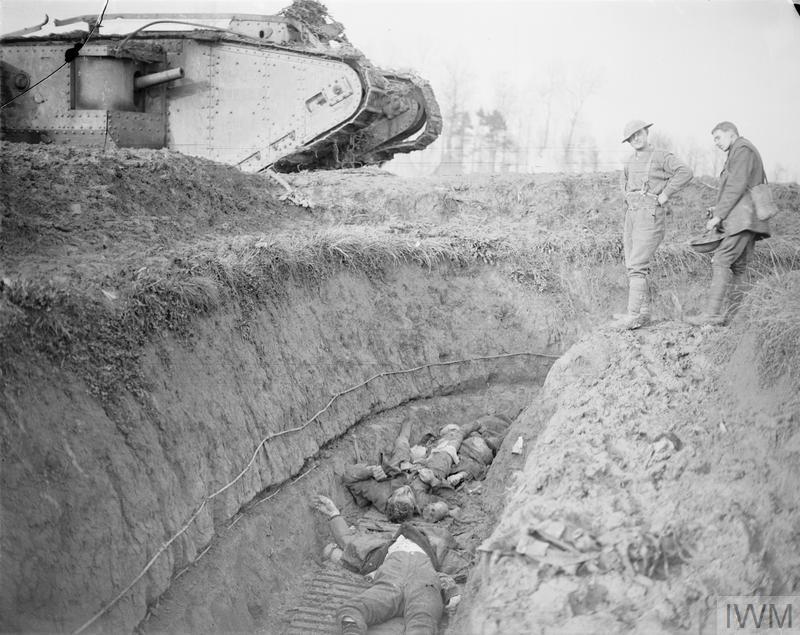
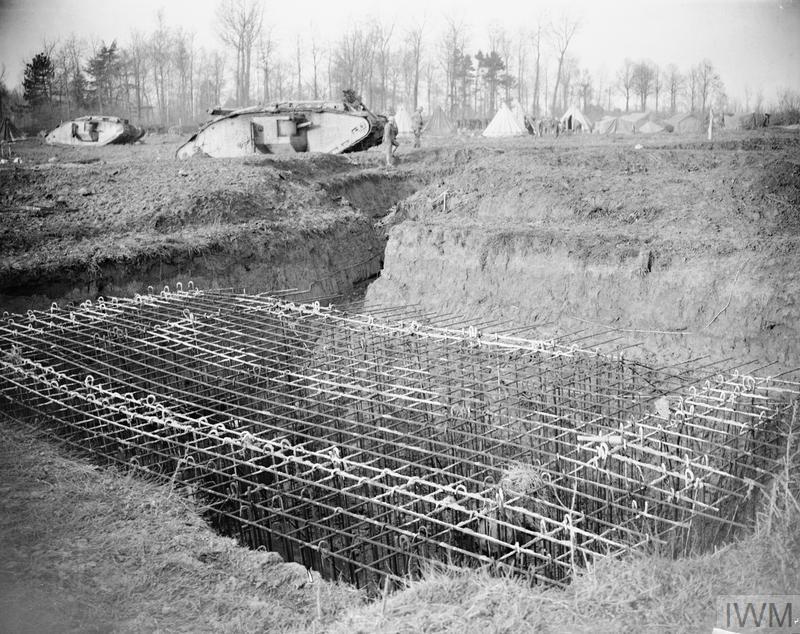
23rd November 1917; An immobilised British Mark IV tank stands at the lip of a captured German trench at Flesquieres, in the bottom of which lie four dead German soldiers. © IWM (Q 7851)
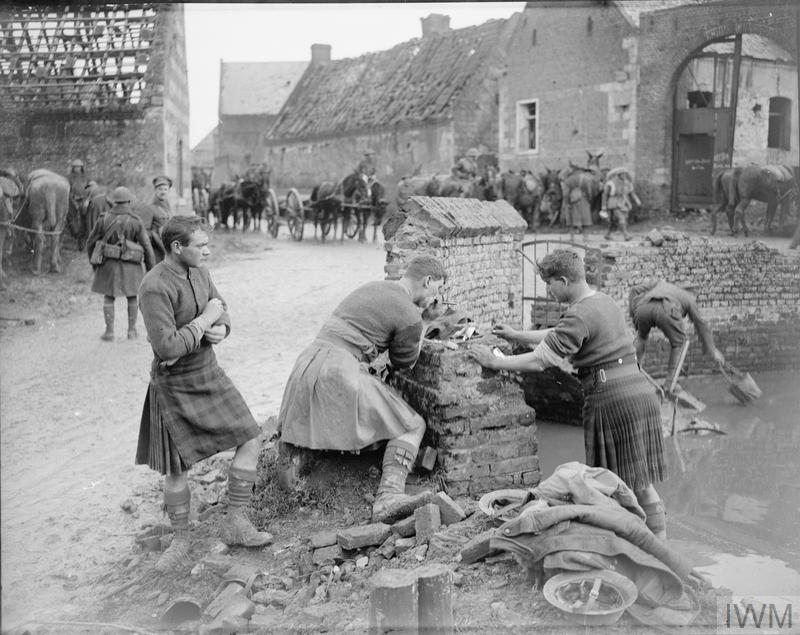
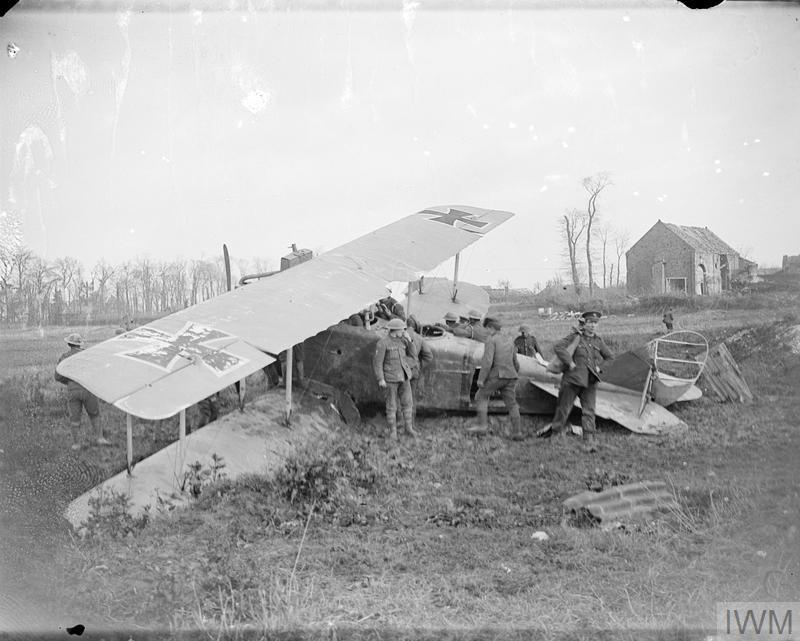
Men of the 51st Highland Division in Flesquieres, 23 November 1917. © IWM (Q 6324)