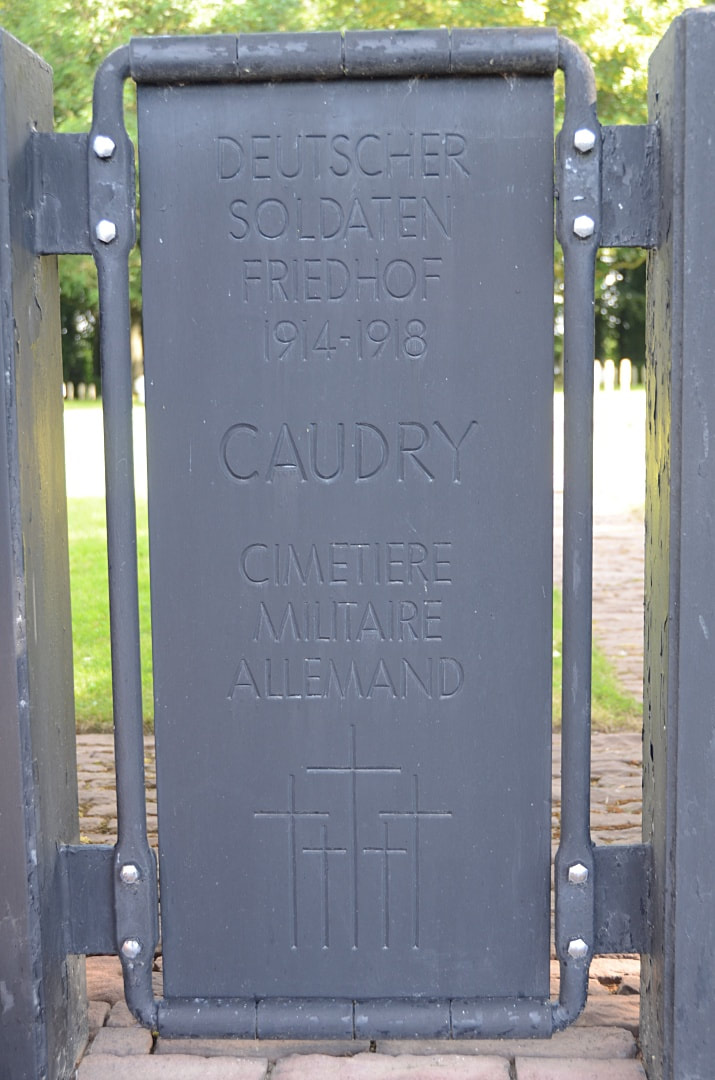
CAUDRY GERMAN MILITARY CEMETERY
Nord
France
GPS Coordinates - Latitude: 50.12036, Longitude: 3.4229
Location Information
Caudry is a town 10 kilometres east of Cambrai on the south side of the main road to Le Cateau. From the Cambrai-Le Cateau road (the N 43) take the dual carriageway into Caudry town. Follow this road for 1100 metres to a traffic light controlled junction. Turn left and follow this road for approximately 225 metres to a small road on the right (the first CWGC sign is at this junction). The cemetery lies on the left side of the road after travelling 100 metres.
Historical Information
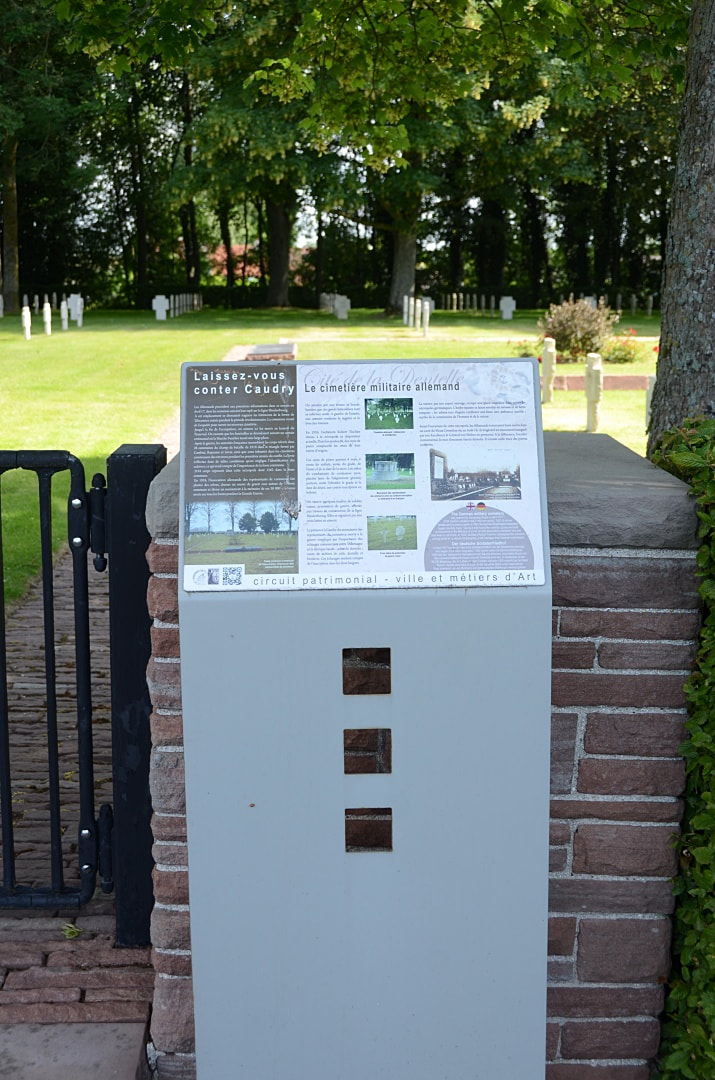
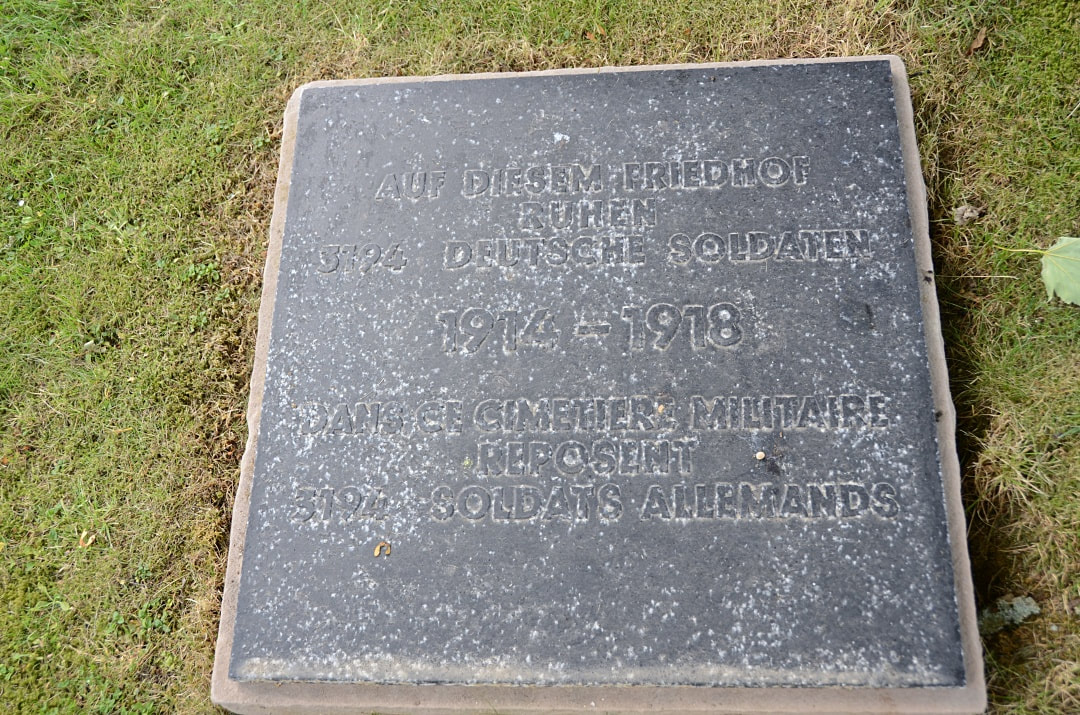
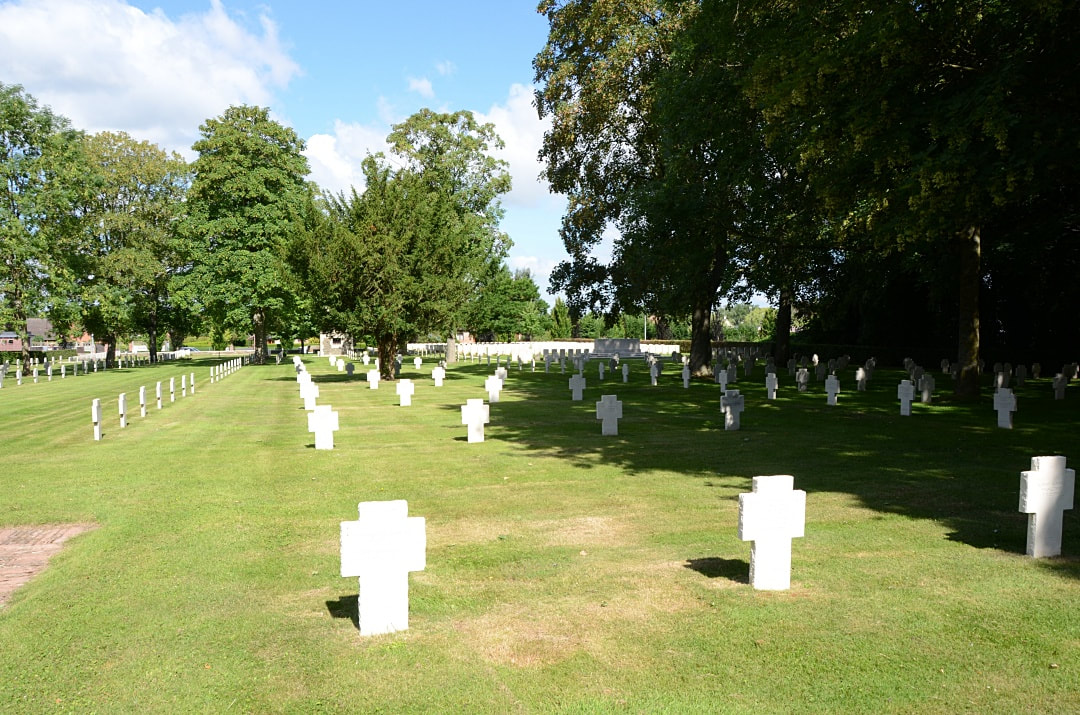
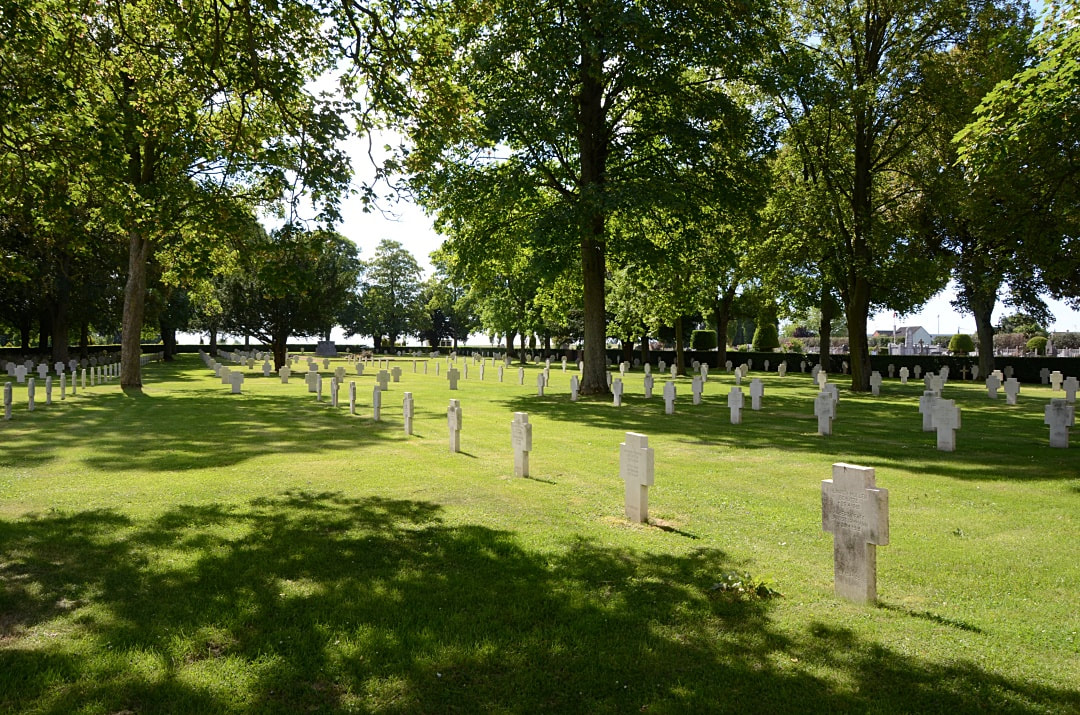
Caudry German Cemetery has 3,195 First World War burials. The Cemetery at Caudry was begun by German troops in 1917, when as a result of the so-called "Easter Battle of Arras" in April 1917, the "Tankschlacht um Cambrai" in November 1917 and the German counterattack in December, many wounded were transferred to rear hospitals and subsequently died here from their injuries.
However, almost 2000 of those resting here lost their lives during the major German offensive in the spring of 1918 and the heavy defensive battles that began in August, and lasted until mid-October 1918 in the area around Caudry.
In the years 1921-1924, the French military authorities expanded the cemetery by concentrating the remains of almost 2,000 German war dead from 28 surrounding municipal areas. Among these dead were those from the fighting from September to December 1914 and the Battle of the Somme from July to November 1916. Those resting here belonged to troops whose homeland garrisons were located in all areas and provinces of the then German Reich.
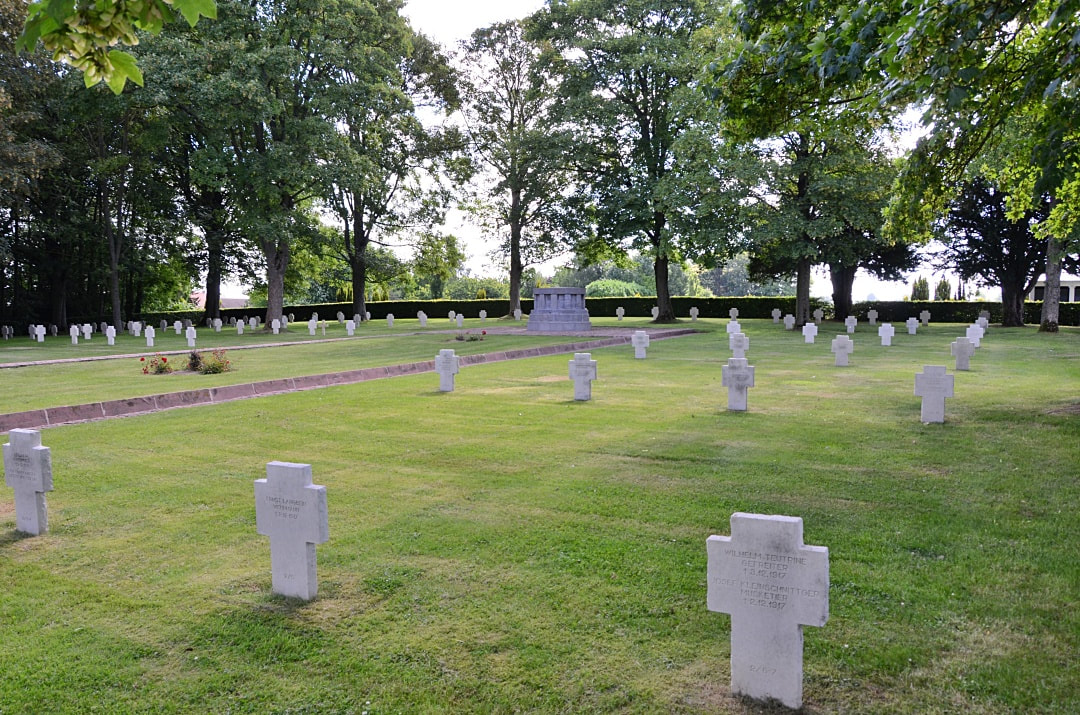
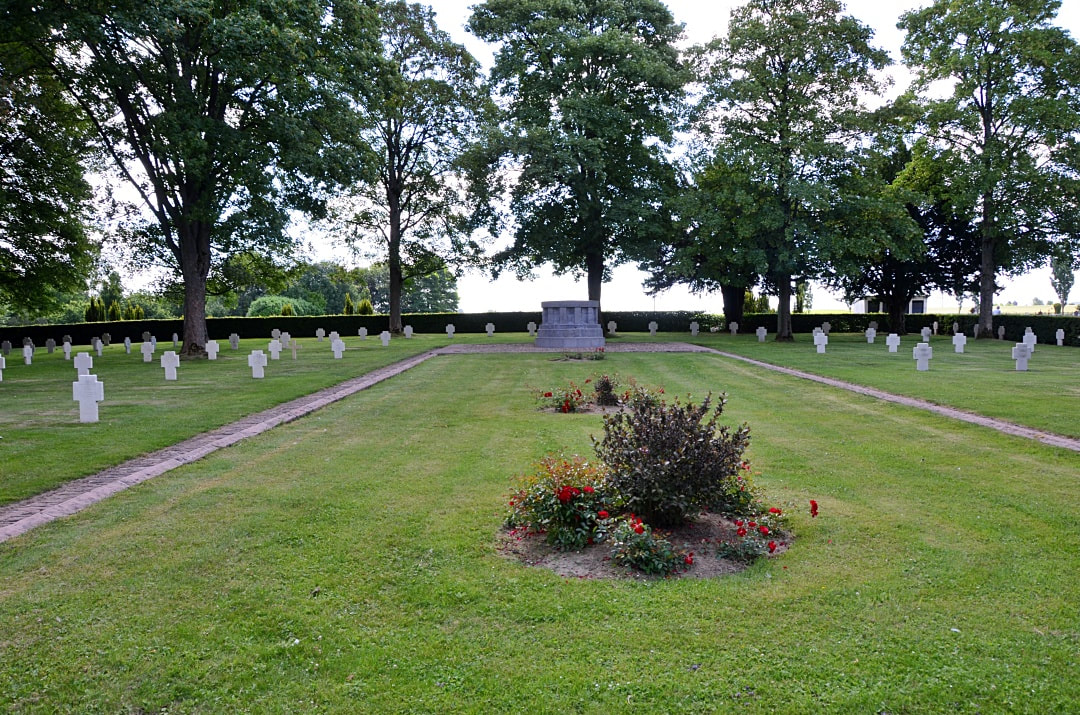
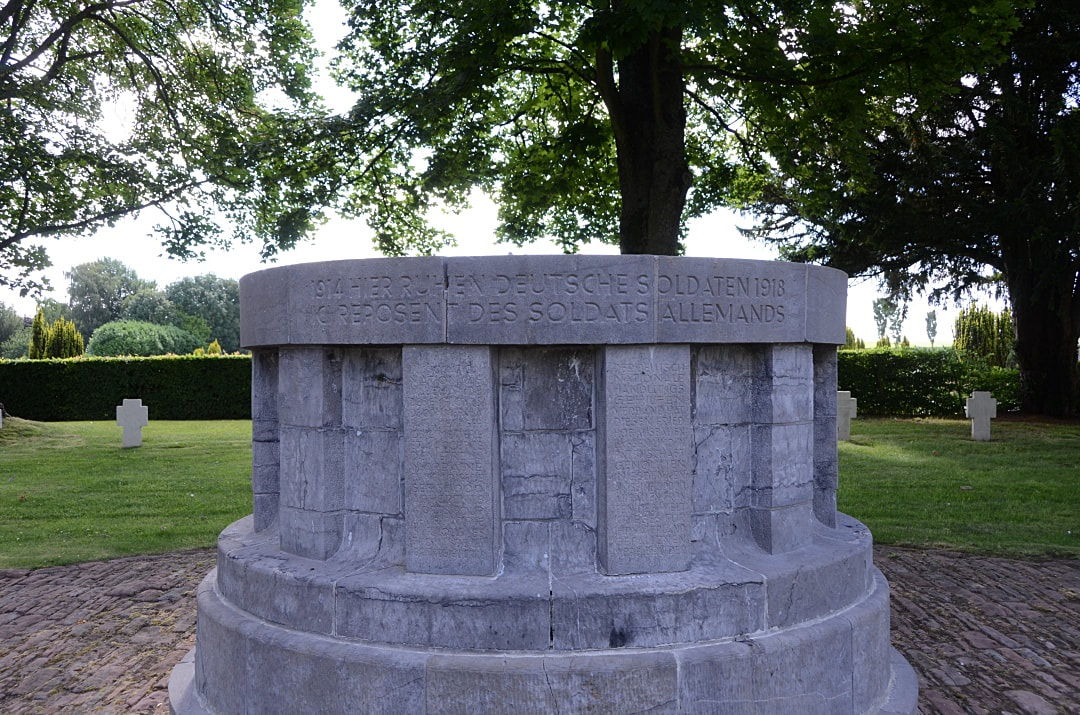
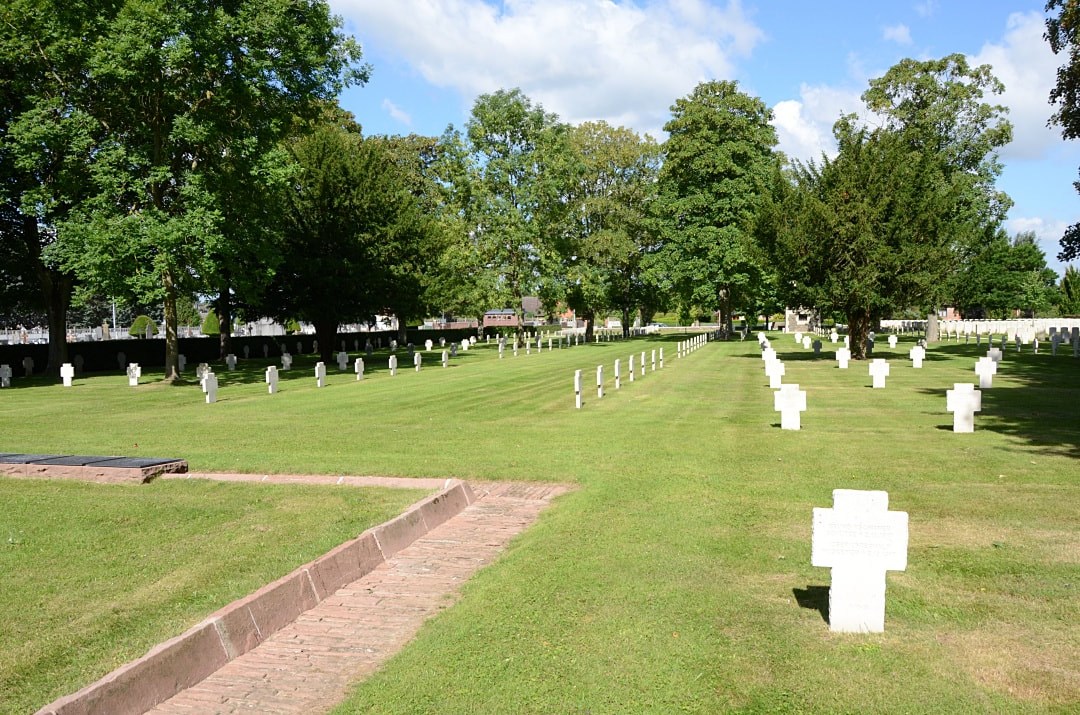
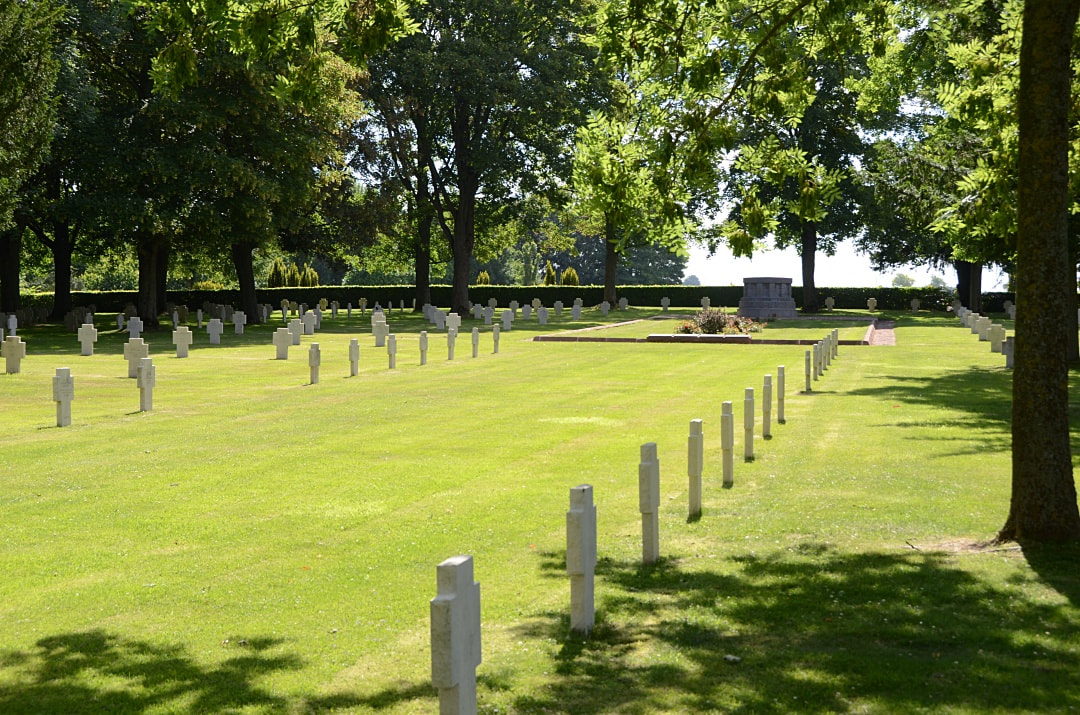
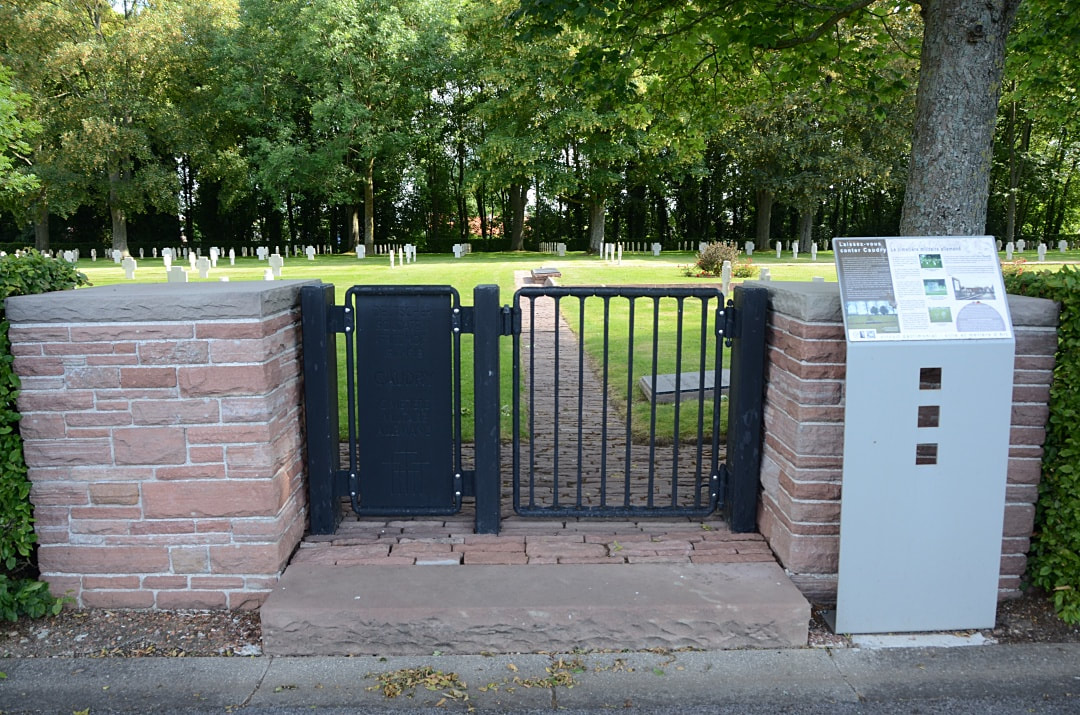
Repair work was undertaken between the wars to improve the condition of the cemetery, this was carried out by the Volksbund Deutsche Kriegsgräberfürsorge e.V. on the basis of an agreement with the French military authorities in 1926. Extensive tree plantings were carried out, the site was fenced by a hedge, access was created both via the community cemetery and the British military cemetery, the communal grave was surrounded with natural stone masonry, the monument was already in place, created during the war by sculptor Ely, Hamburg. However, the problem of permanent labelling of the tombs remained unresolved due to the lack of agreement and the Second World War that broke out in 1939.
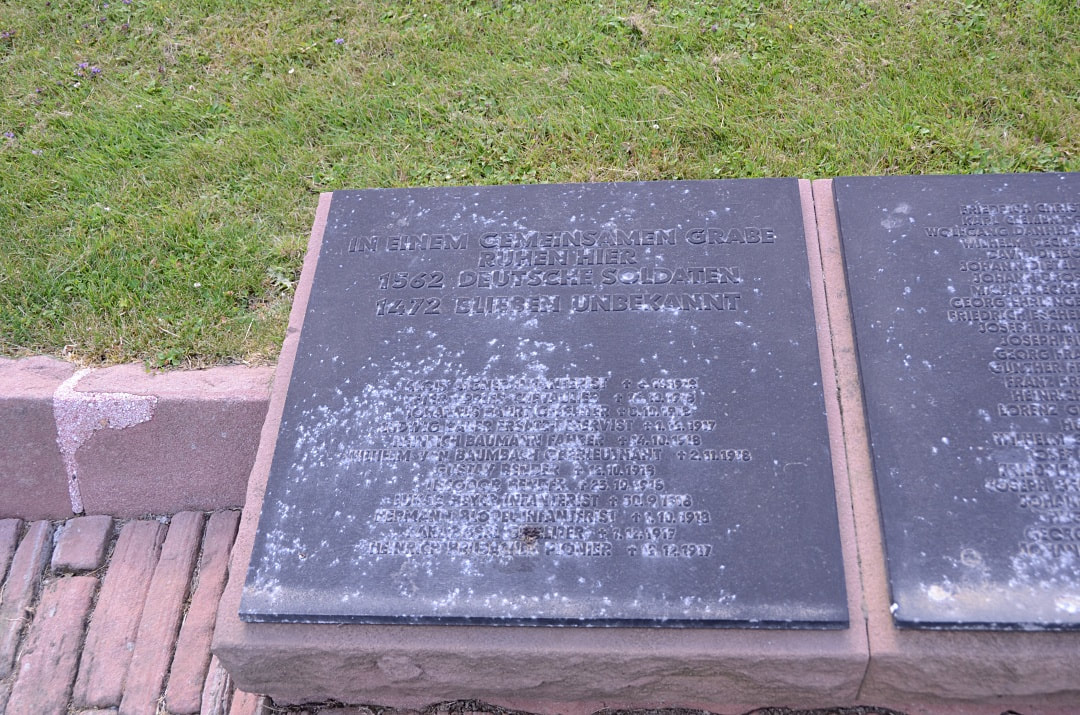
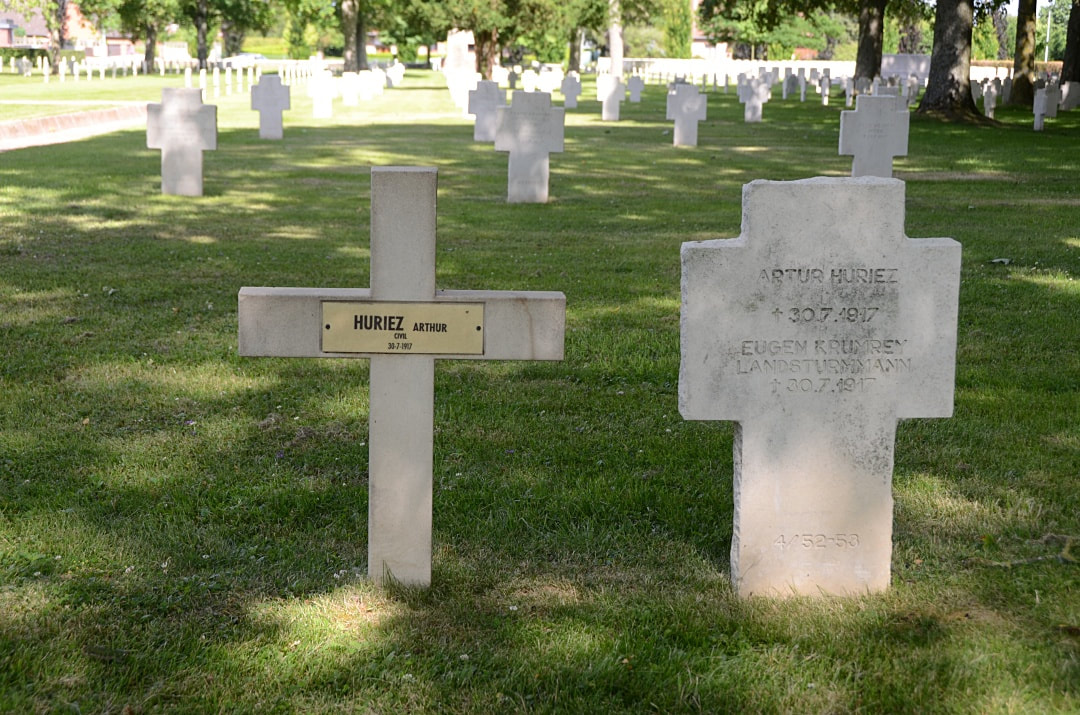
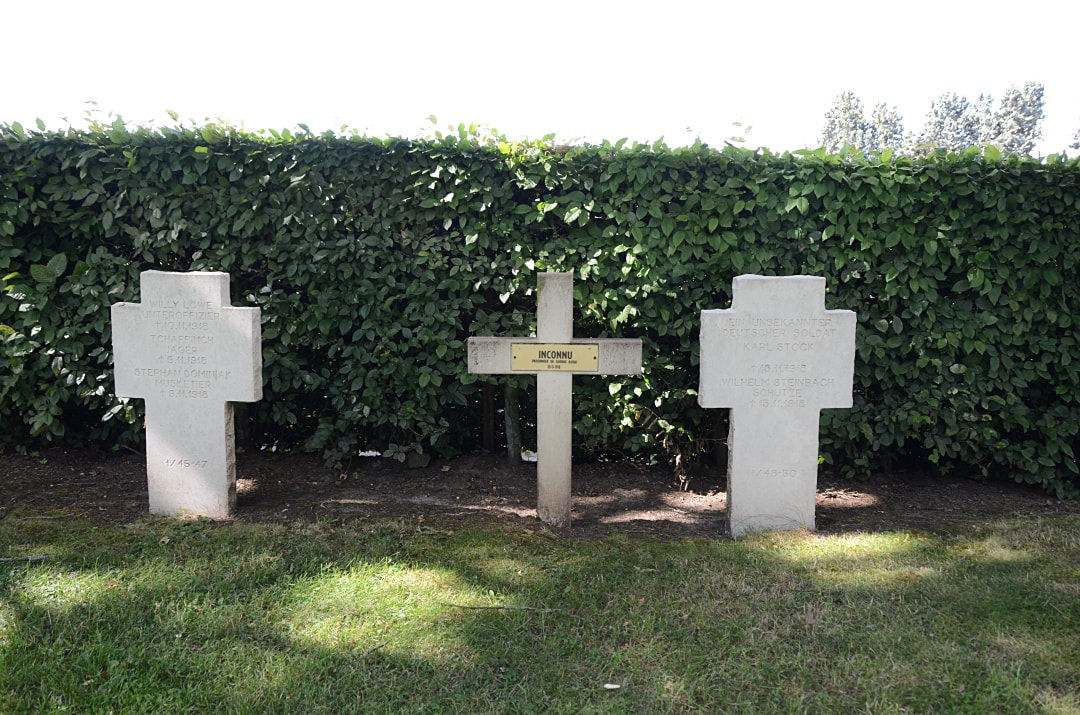
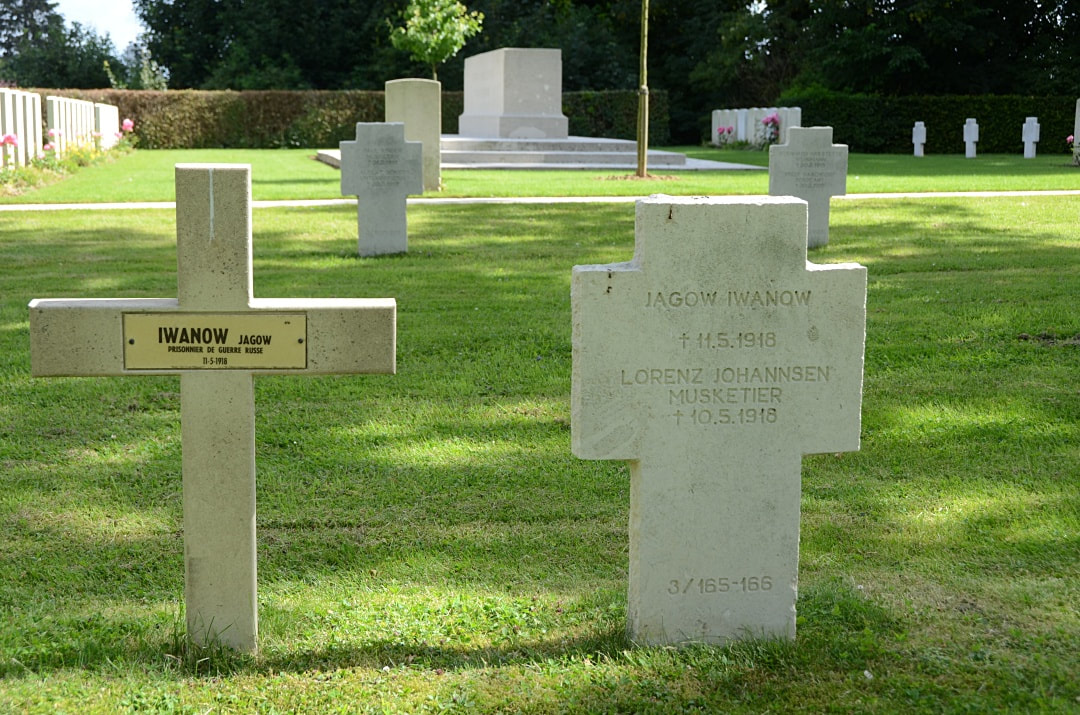
In July 1966, the Volksbund Deutsche Kriegsgräberfürsorge e.V. - financially supported by the Federal Government - was able to undertake the final design of the German military cemeteries of the First World War in France. In addition to landscaping the facility, the previous temporary wooden graves were exchanged for crosses made of natural stone with engraved names and details of those resting here. By 1976, of the 3,194 burials, 1,632 rest in individual graves; 79 remained without names. In the communal tomb with 1,562 burials, only 90 are known by name. For religious reasons, the three graves of the fallen of the Jewish faith received a memorial of natural stone instead of a cross, the Hebrew inscription is: 1. (above) "Here rests buried ... ." 2. (below) "May his soul be integrated in the circle of the living."
Above translated from https://www.volksbund.de/
Caudry town was the scene of part of the Battle of Le Cateau on the 26th August 1914, and from that date it remained in German hands until the 10th October 1918, when it was captured by the 37th Division. It had been a German centre for medical units, and during October 1918 and the following five months the 21st, 3rd, 19th and 49th Casualty Clearing Stations passed through it.
Caudry British Cemetery (originally called the German Cemetery Extension) was begun in October 1918 by the New Zealand Division and carried on by the Casualty Clearing Stations. It was completed after the Armistice by the concentration of graves from the German Cemetery and from Audencourt British Cemetery. At the same time the bodies of two French soldiers and one Italian were removed to other burial grounds. Caudry German Military Cemetery stands behind the British Cemetery.
Total Burials: 3,195.

Caudry is a town 10 kilometres east of Cambrai on the south side of the main road to Le Cateau. From the Cambrai-Le Cateau road (the N 43) take the dual carriageway into Caudry town. Follow this road for 1100 metres to a traffic light controlled junction. Turn left and follow this road for approximately 225 metres to a small road on the right (the first CWGC sign is at this junction). The cemetery lies on the left side of the road after travelling 100 metres.
Historical Information
Caudry German Cemetery has 3,195 First World War burials. The Cemetery at Caudry was begun by German troops in 1917, when as a result of the so-called "Easter Battle of Arras" in April 1917, the "Tankschlacht um Cambrai" in November 1917 and the German counterattack in December, many wounded were transferred to rear hospitals and subsequently died here from their injuries.
However, almost 2000 of those resting here lost their lives during the major German offensive in the spring of 1918 and the heavy defensive battles that began in August, and lasted until mid-October 1918 in the area around Caudry.
In the years 1921-1924, the French military authorities expanded the cemetery by concentrating the remains of almost 2,000 German war dead from 28 surrounding municipal areas. Among these dead were those from the fighting from September to December 1914 and the Battle of the Somme from July to November 1916. Those resting here belonged to troops whose homeland garrisons were located in all areas and provinces of the then German Reich.
Repair work was undertaken between the wars to improve the condition of the cemetery, this was carried out by the Volksbund Deutsche Kriegsgräberfürsorge e.V. on the basis of an agreement with the French military authorities in 1926. Extensive tree plantings were carried out, the site was fenced by a hedge, access was created both via the community cemetery and the British military cemetery, the communal grave was surrounded with natural stone masonry, the monument was already in place, created during the war by sculptor Ely, Hamburg. However, the problem of permanent labelling of the tombs remained unresolved due to the lack of agreement and the Second World War that broke out in 1939.
In July 1966, the Volksbund Deutsche Kriegsgräberfürsorge e.V. - financially supported by the Federal Government - was able to undertake the final design of the German military cemeteries of the First World War in France. In addition to landscaping the facility, the previous temporary wooden graves were exchanged for crosses made of natural stone with engraved names and details of those resting here. By 1976, of the 3,194 burials, 1,632 rest in individual graves; 79 remained without names. In the communal tomb with 1,562 burials, only 90 are known by name. For religious reasons, the three graves of the fallen of the Jewish faith received a memorial of natural stone instead of a cross, the Hebrew inscription is: 1. (above) "Here rests buried ... ." 2. (below) "May his soul be integrated in the circle of the living."
Above translated from https://www.volksbund.de/
Caudry town was the scene of part of the Battle of Le Cateau on the 26th August 1914, and from that date it remained in German hands until the 10th October 1918, when it was captured by the 37th Division. It had been a German centre for medical units, and during October 1918 and the following five months the 21st, 3rd, 19th and 49th Casualty Clearing Stations passed through it.
Caudry British Cemetery (originally called the German Cemetery Extension) was begun in October 1918 by the New Zealand Division and carried on by the Casualty Clearing Stations. It was completed after the Armistice by the concentration of graves from the German Cemetery and from Audencourt British Cemetery. At the same time the bodies of two French soldiers and one Italian were removed to other burial grounds. Caudry German Military Cemetery stands behind the British Cemetery.
Total Burials: 3,195.