
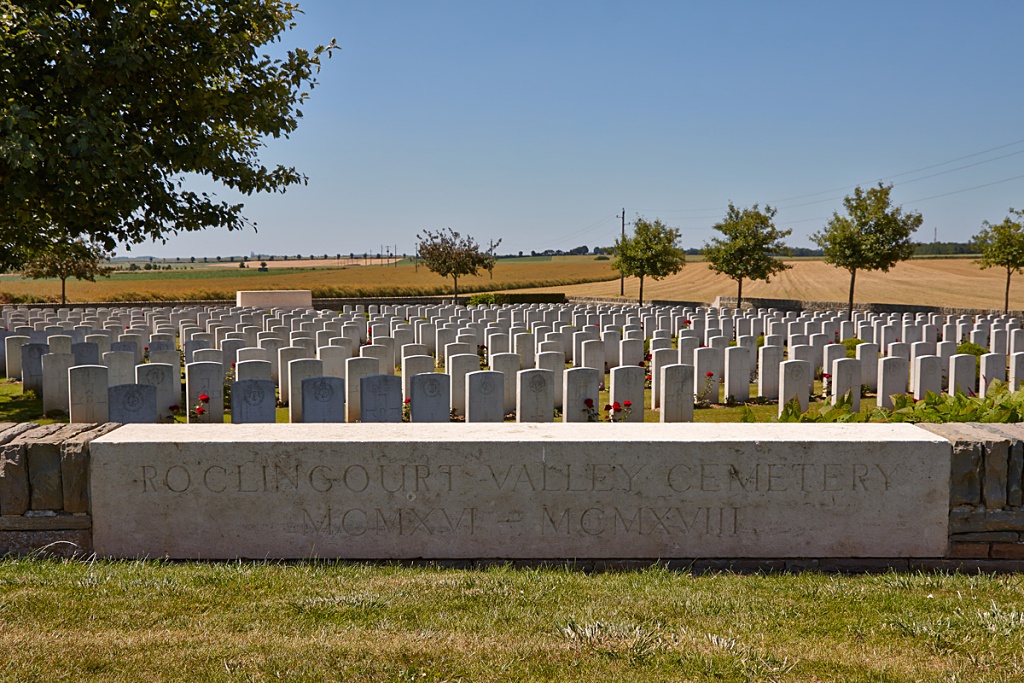
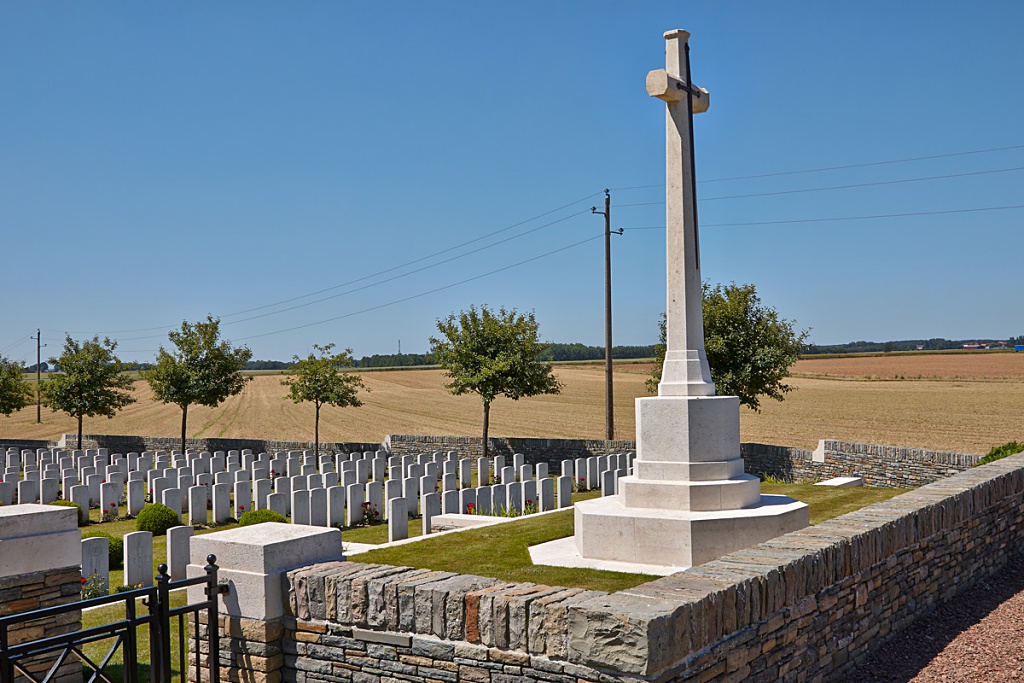
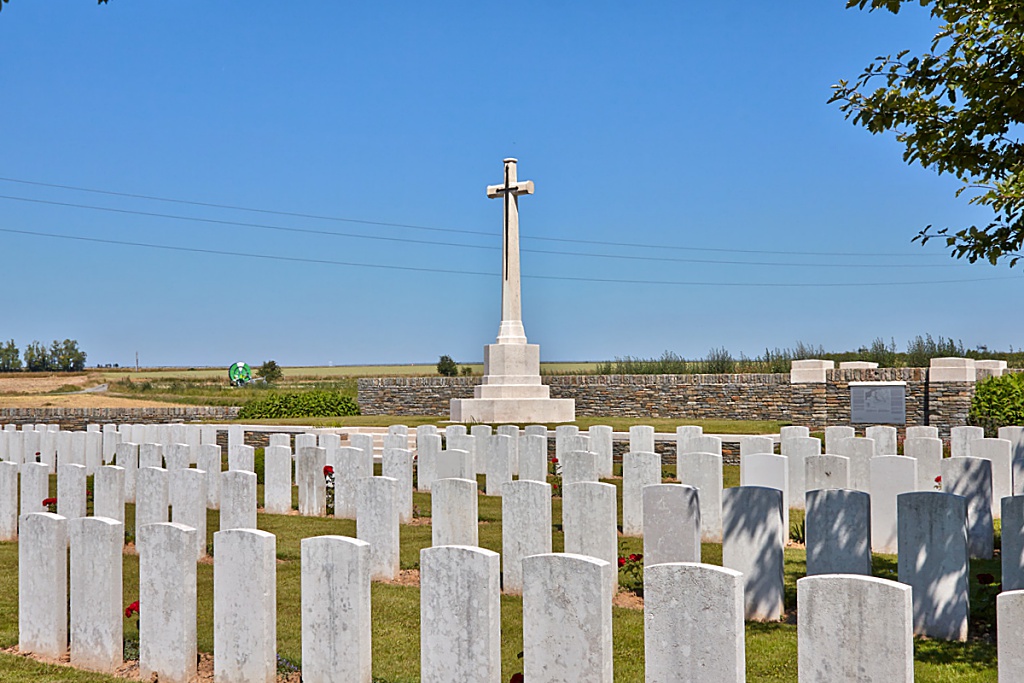
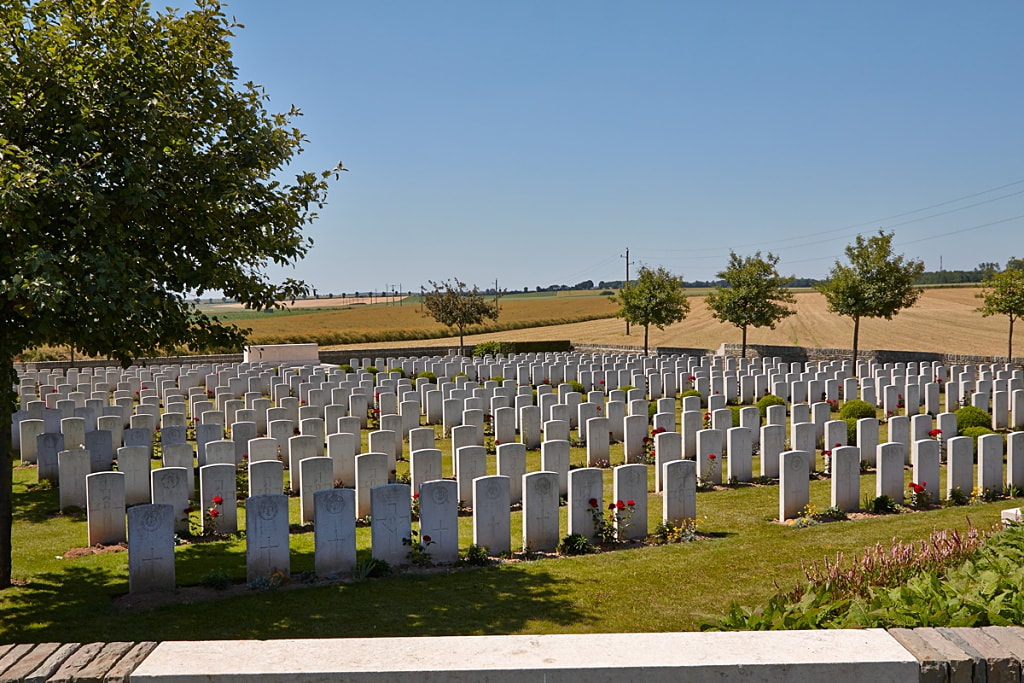
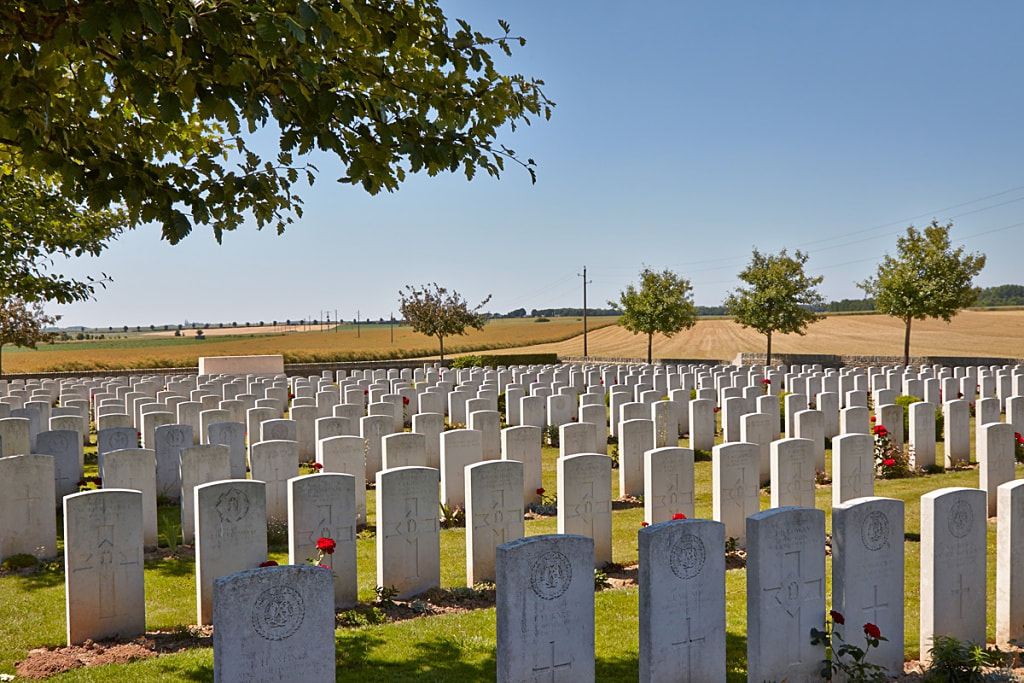
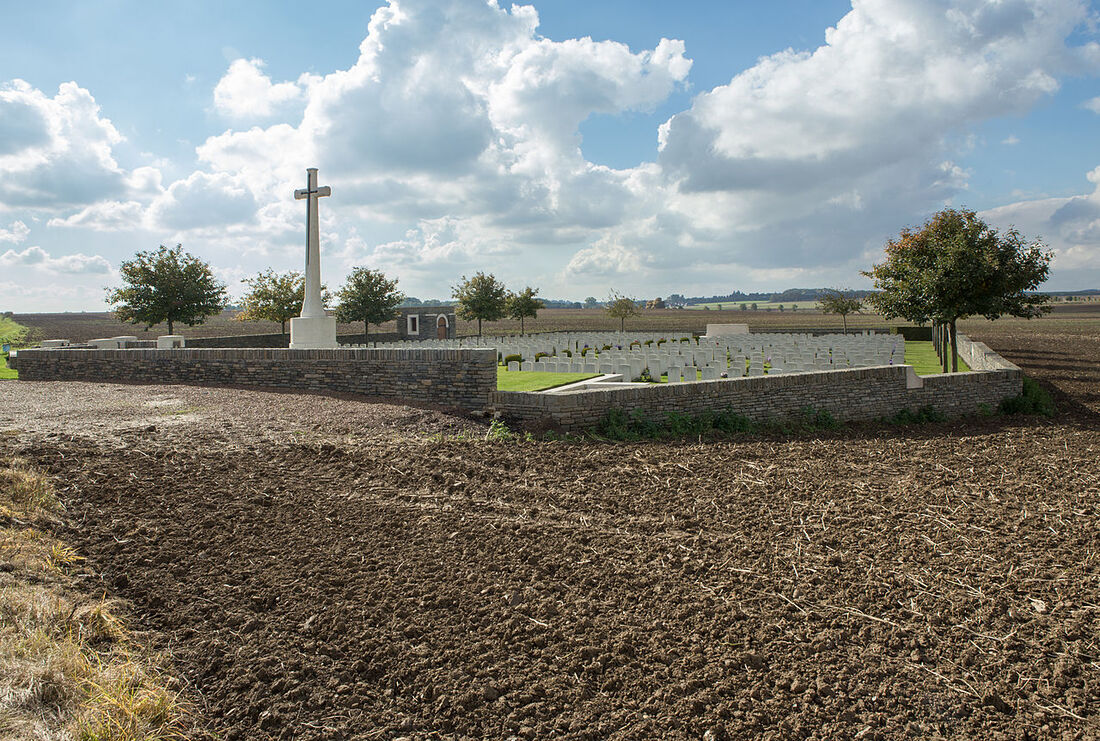
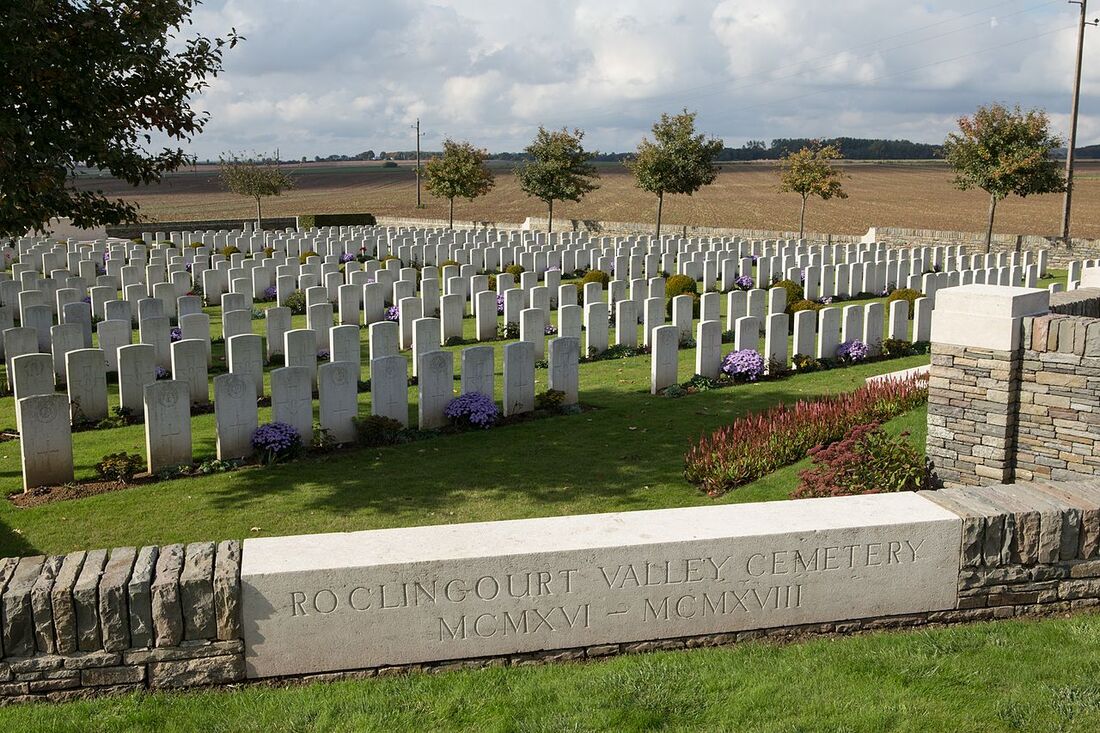
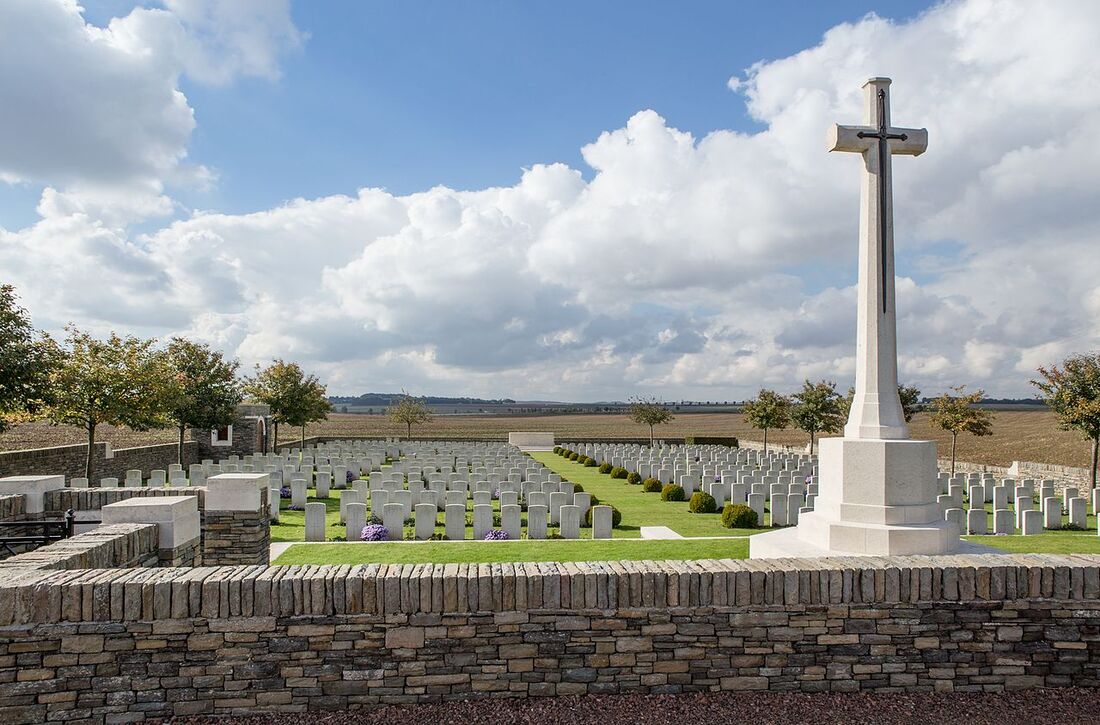
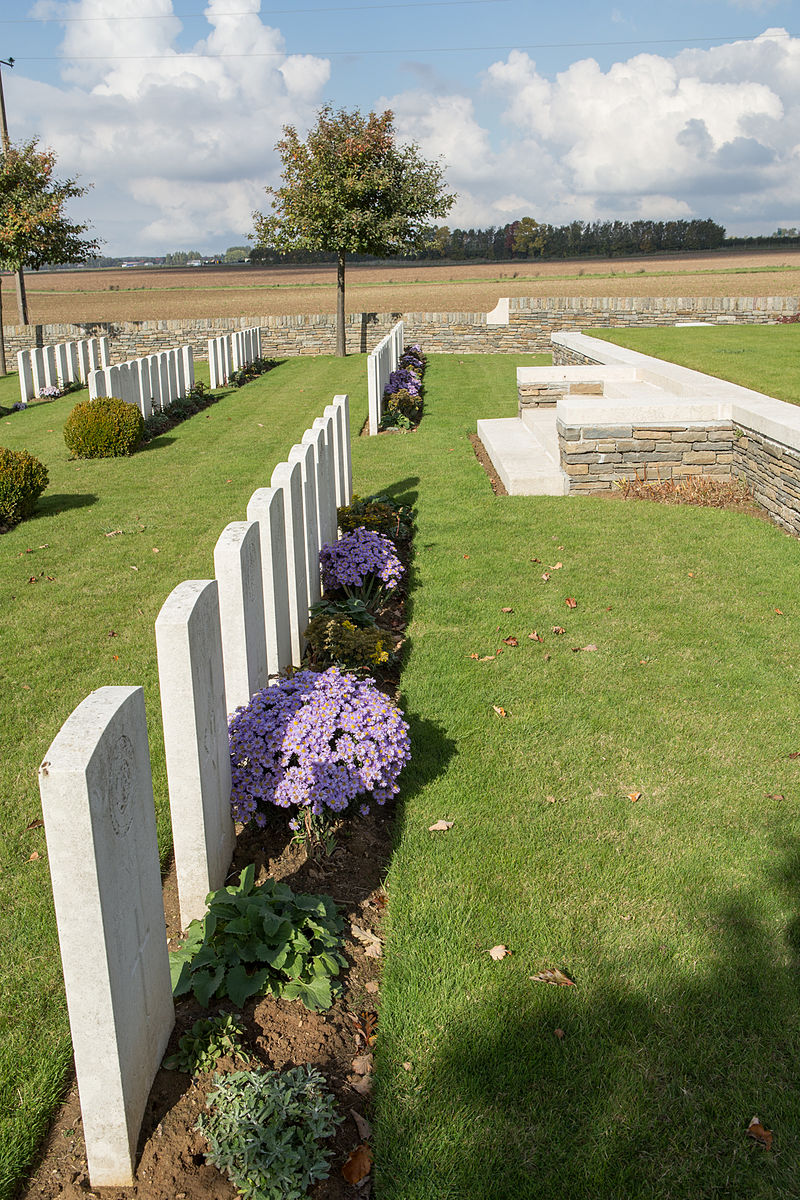
ROCLINCOURT VALLEY CEMETERY
Pas De Calais
France
GPS Coordinates Latitude: 50.33322 Longitude: 2.80449
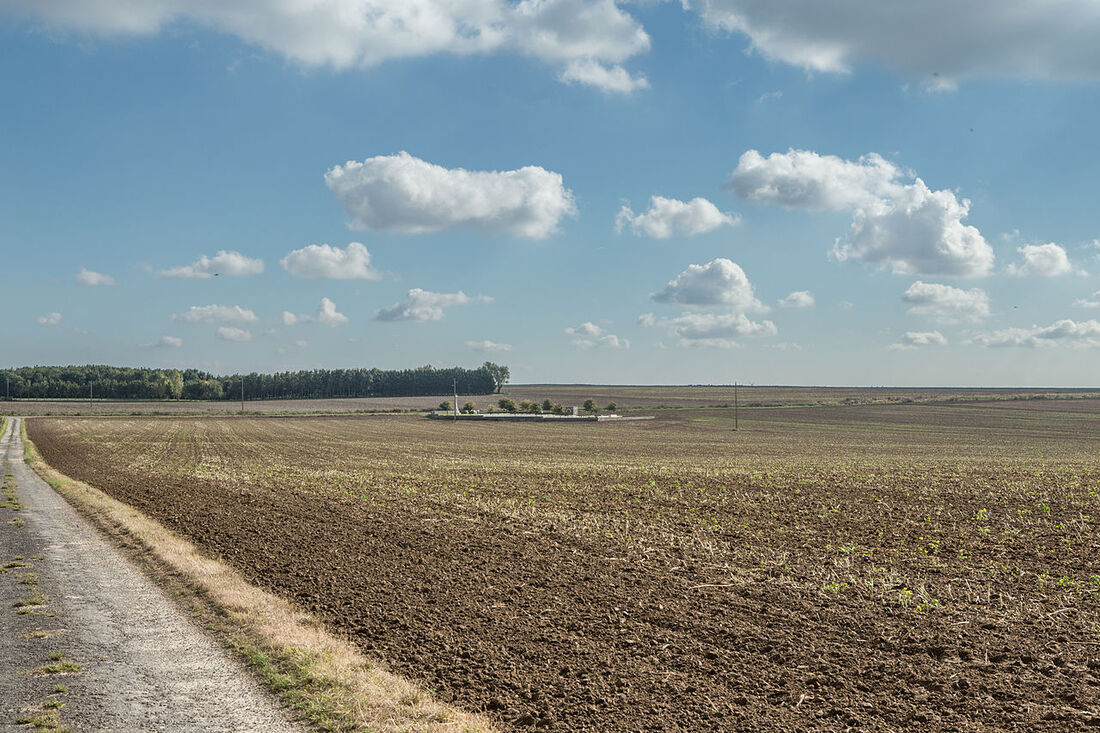
Picture © Werner Van Caneghem
Location Information
Roclincourt is a village a little to the east of the road from Arras to Lens. Take the N17 from Arras until the junction of this road and the D60. Travel along the D60 into Roclincourt village. Roclincourt Valley Cemetery lies to the north-east of the village. It is on a farm track signposted off the Thelus road.
Visiting Information
Wheelchair access is possible with some difficulty.
Historical Information
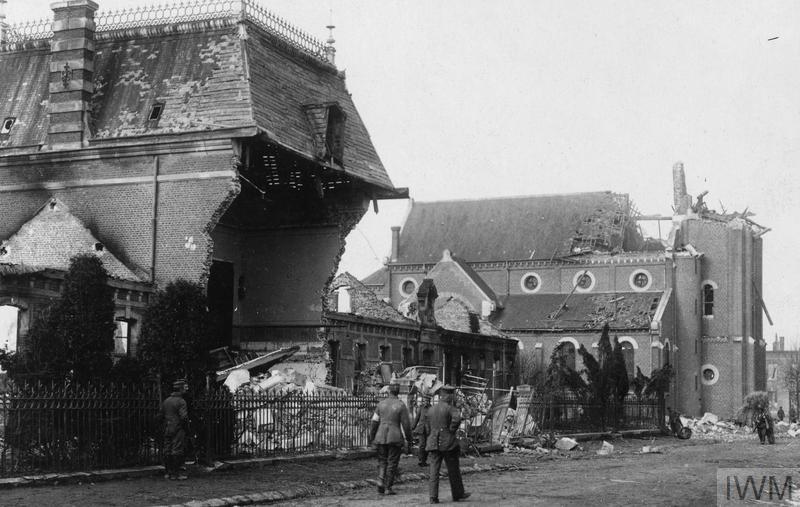
Roclincourt was just within the Allied lines before the Battle of Arras in 1917 and it was from here that the 51st (Highland) and 34th Divisions advanced on 9 April 1917. The 1st Canadian Division attacked further north, across the Lens road.
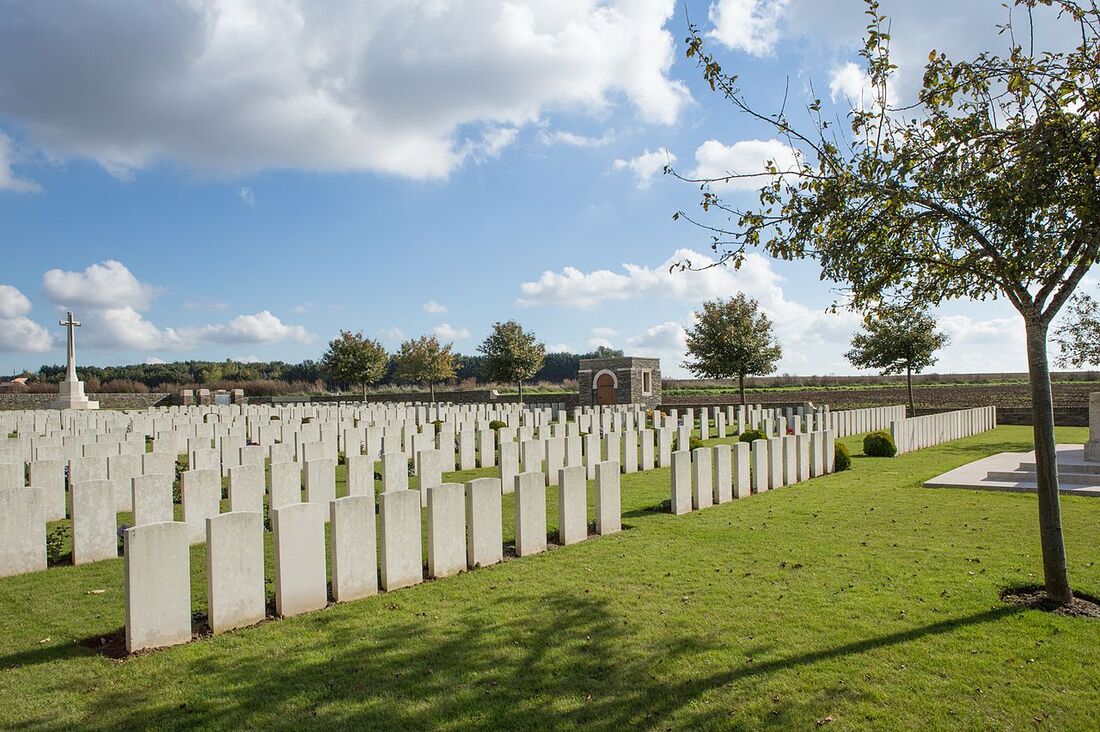
Roclincourt Valley Cemetery (originally called Roclincourt Forward Cemetery No.2) was begun after 9 April 1917 by the units which fought on that day. It was used until the following August when it contained the graves of 94 soldiers, of whom 40 belonged to the 51st Division. These form Plot I, Rows A to E and part of Row F. The cemetery was enlarged after the Armistice when graves, almost all of April 1917 and mostly from the 34th and 51st Divisions, were brought in from the surrounding battlefields and from certain smaller cemeteries, including:-
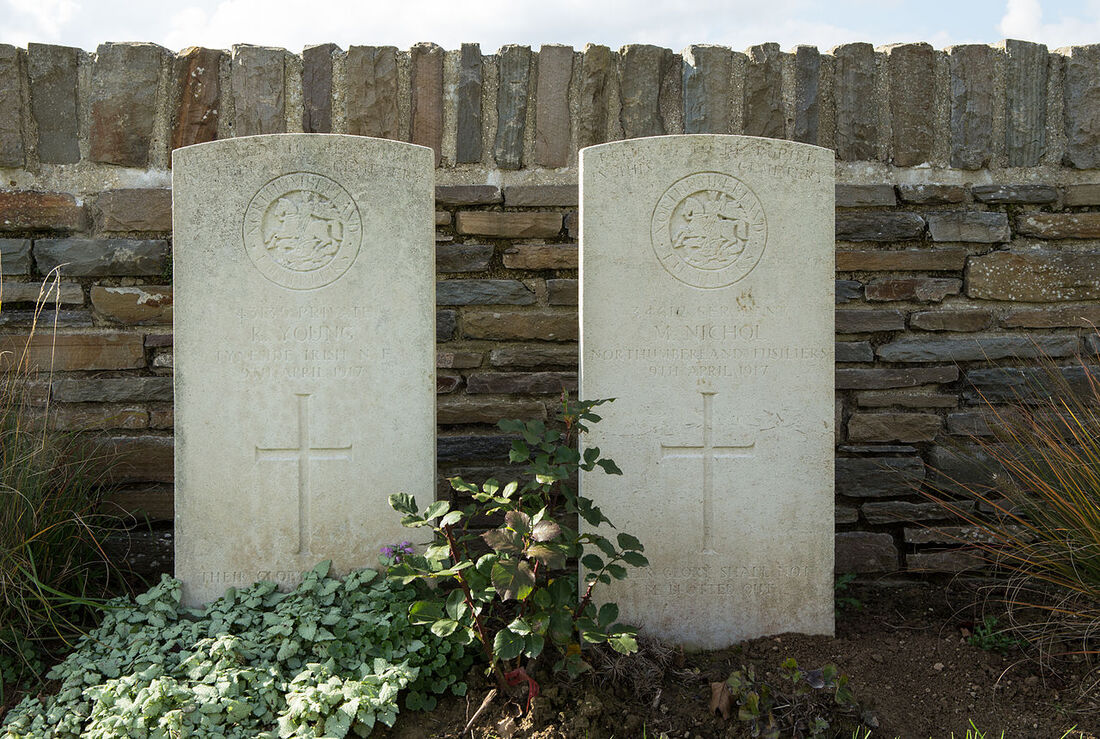
KING CRATER CEMETERY, ROCLINCOURT: a mine crater, it contained 99 burials in five big graves, made by the 34th Division in the middle of April 1917, all dating from 9 April. All but two belonged to the Tyneside Brigades of the Northumberland Fusiliers.
KITE CRATER CEMETERY, ST LAURENT-BLANGY, contained 53 burials of 9 April 1917 in five big graves, mainly of the 34th Division.
RABS ROAD CEMETERY, ST LAURENT-BLANGY, contained 20 burials of 9 or 13 April 1917, 16 belonging to the 15th or 16th Royal Scots.
ROCLINCOURT LONG CEMETERY (called at one time Roclincourt Forward Cemetery No.3), contained 68 burials of 9 April 1917, all 51st Division.
THELUS ROAD CEMETERY, ROCLINCOURT, was made by the XVII Corps and contained 42 burials of 9 April 1917, 51st Division.
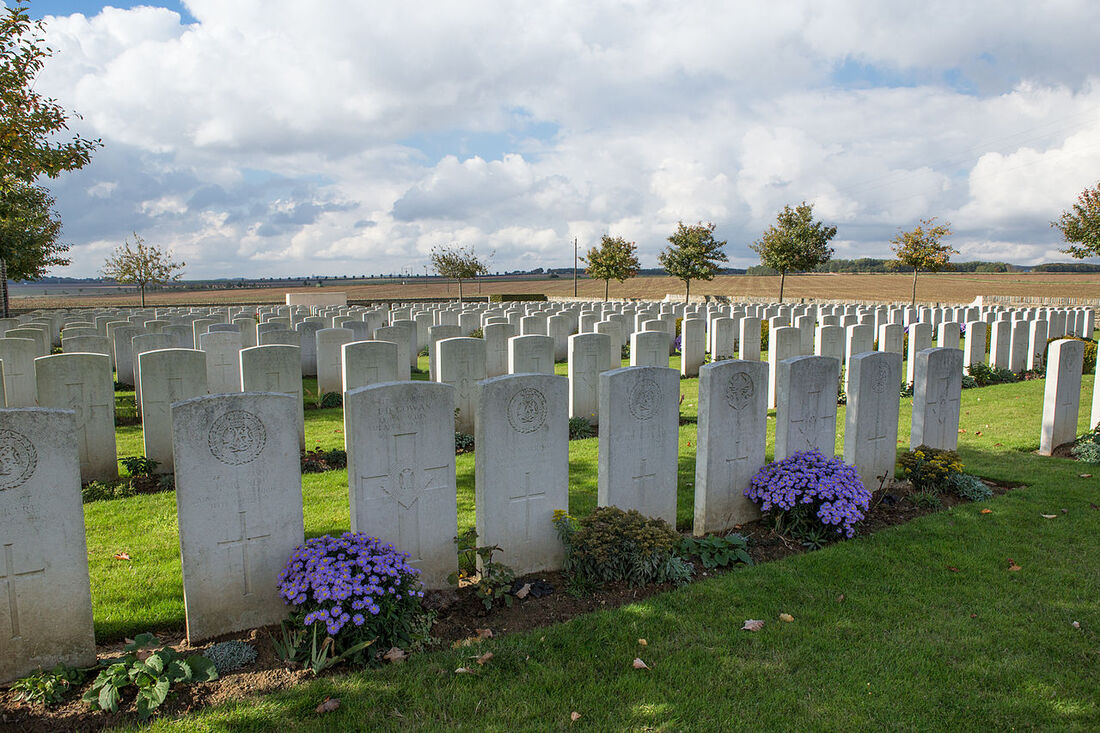
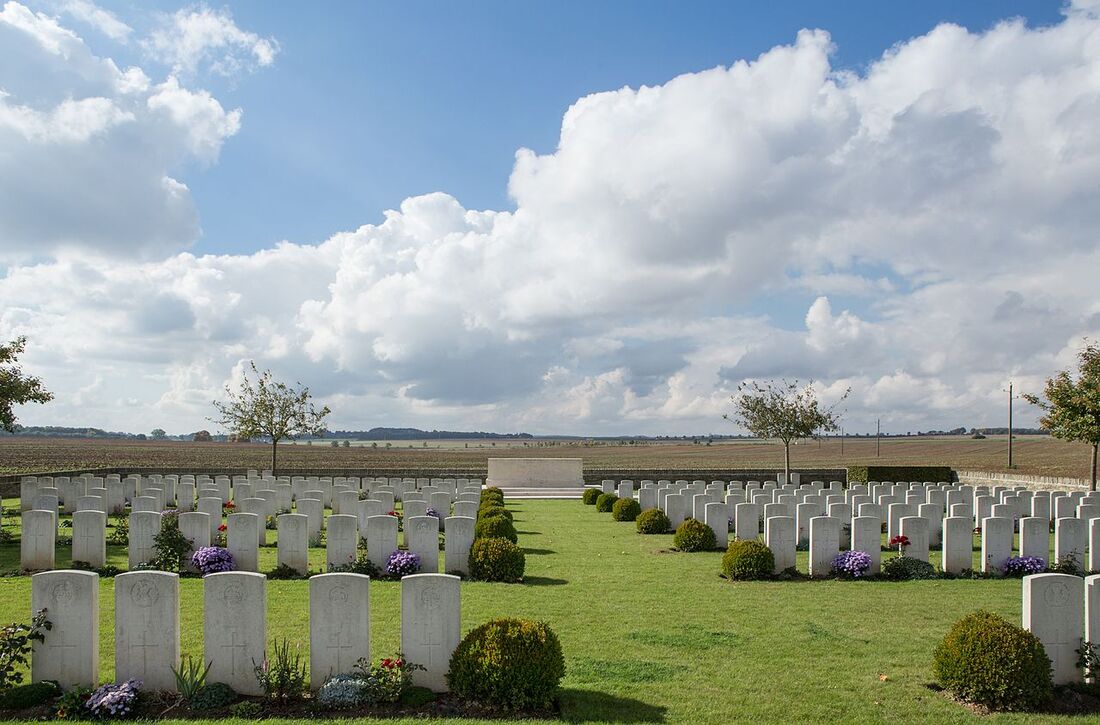
The cemetery now contains 518 burials and commemorations of the First World War. 83 of the burials are unidentified but there are special memorials to four casualties known, or believed, to be buried among them.
Total Burials: 548.
Identified Casualties: United Kingdom 440, South Africa 22, New Zealand 2, Canada 1. Total 465.
Unidentified Casualties: 83.
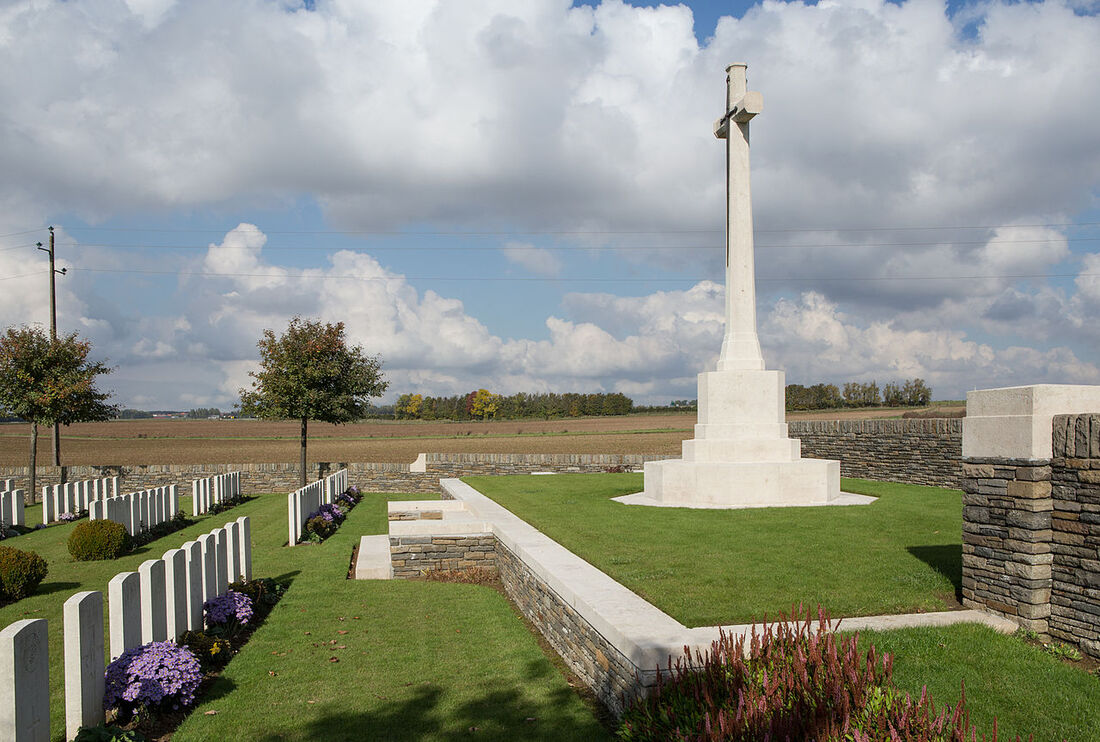
The cemetery was designed by Sir Reginald Blomfield and Noel Ackroyd Rew
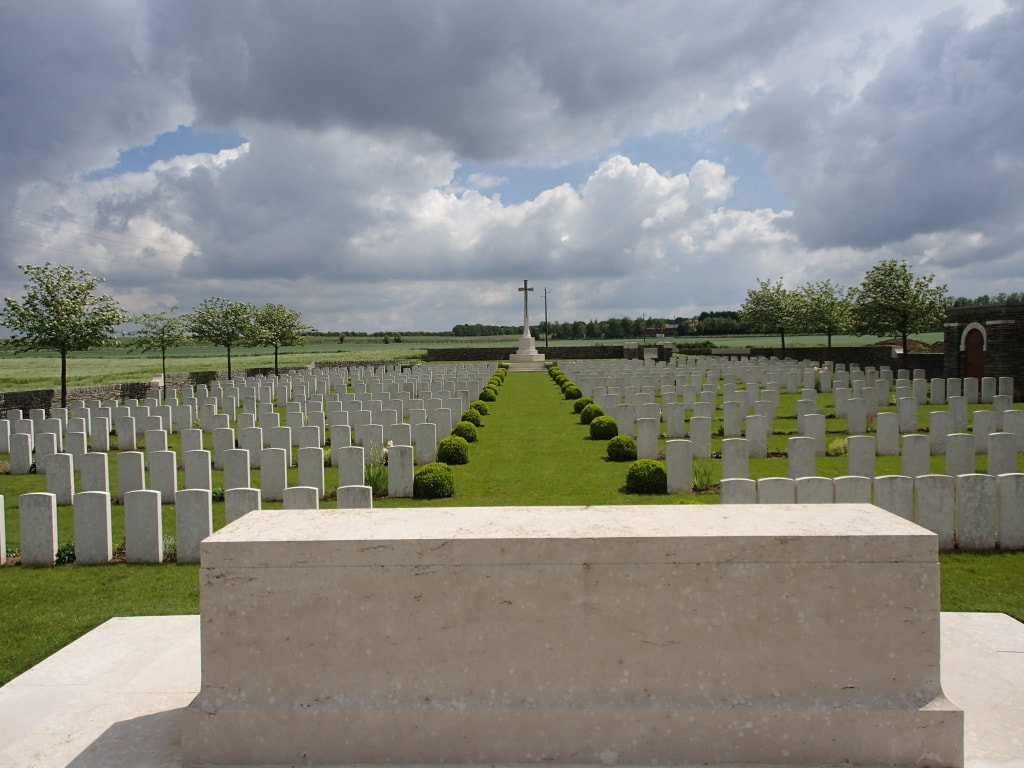
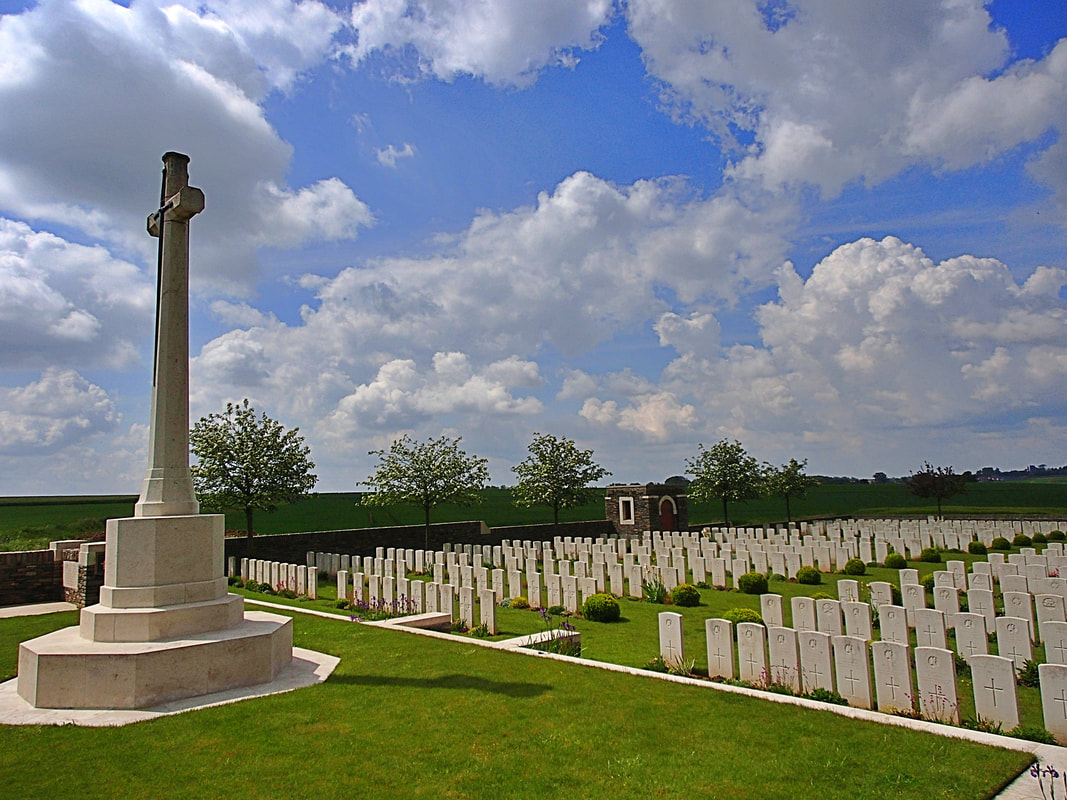
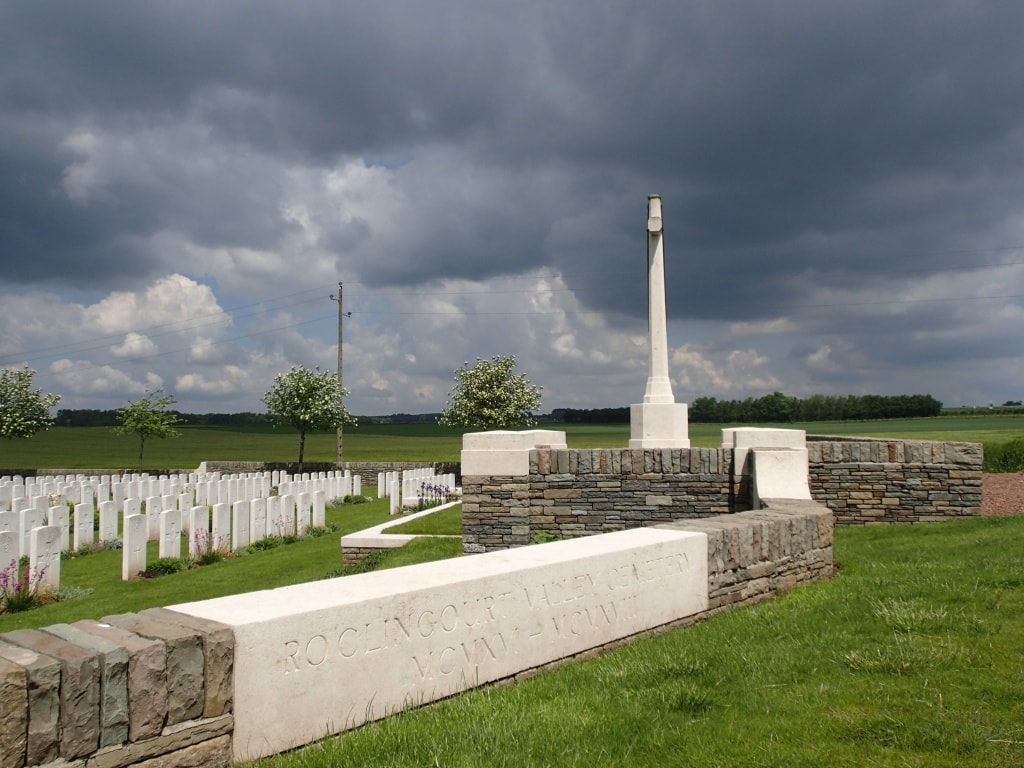
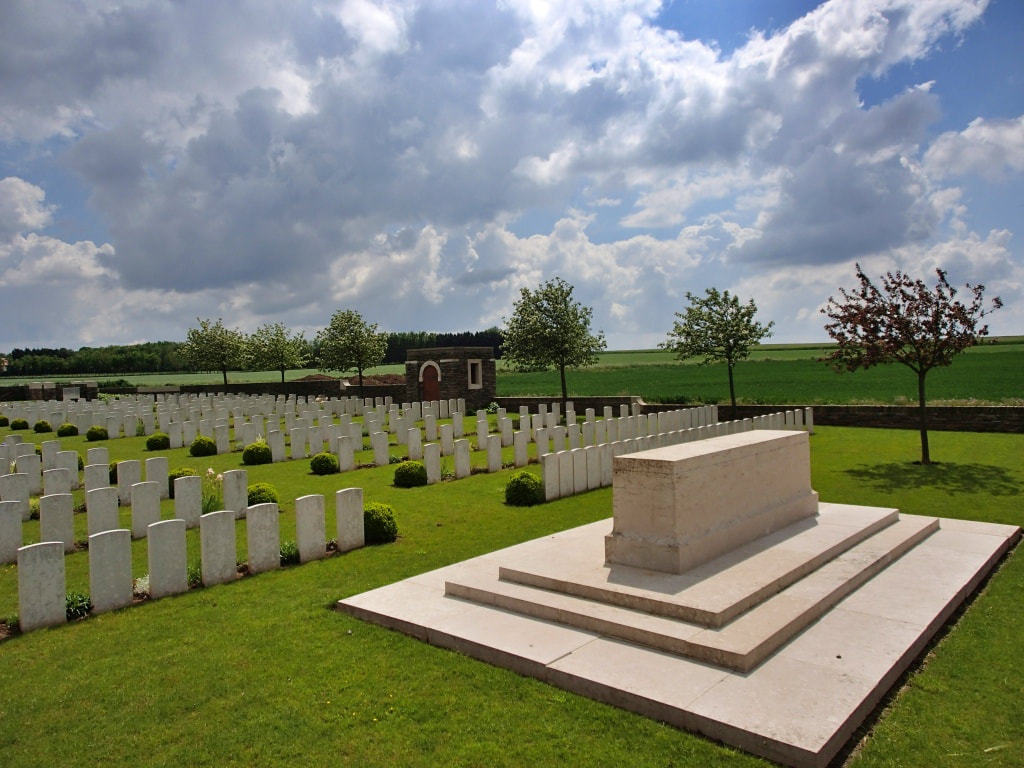
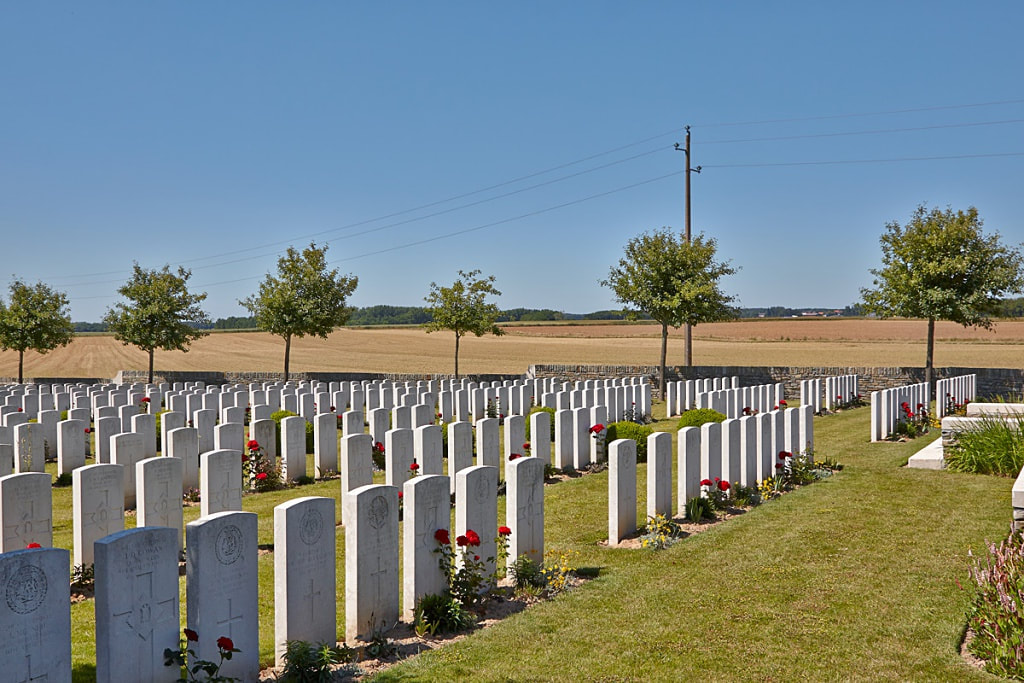
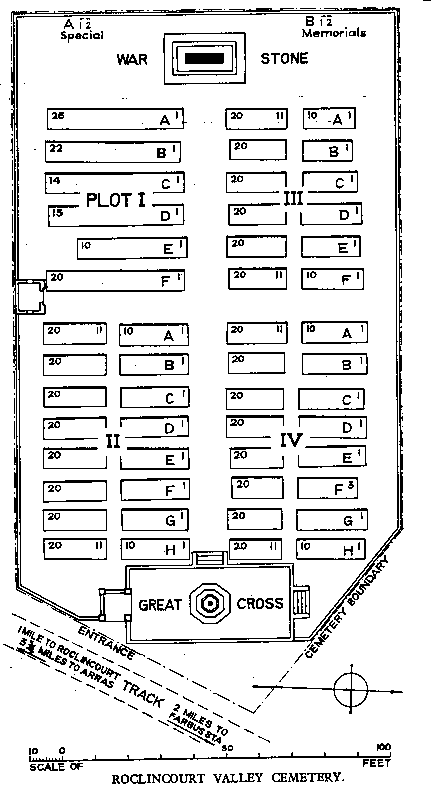
Images in this gallery © Geerhard Joos
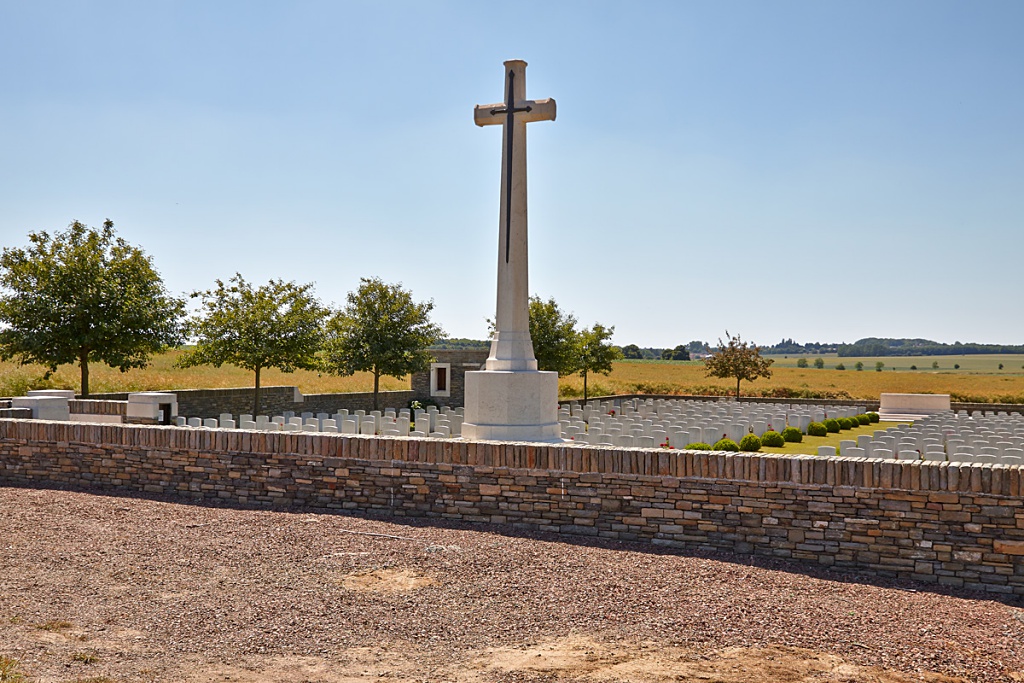
Shot at Dawn
10263 Private, Edward Bolton, 1st Bn. Cheshire Regiment, executed for desertion 14th April 1916, Plot II. F. 7.
A pre-War Regular, he was sent to France in August 1914 & deserted after one month with the BEF. Bolton was recaptured, being tried for Desertion on 11 August 1915. Sentence of death was commuted to 10 years’ Penal Servitude, suspended.
3 months later, he was granted leave to return to England, failed to return & was arrested at Ince in Lancashire where he had been working under the name of Cunningham.
Returned to France for his second trial, he disputed none of the evidence, giving an account of having originally enlisted in the name of Bolton because he had been in trouble (his real name being Cunningham); of his being treated with contempt in the regiment after his first desertion; & of some effort made to join another regiment when he had been in England. Bolton asked for another chance, but in vain. (Corns, p. 230, with an eye-witness account of his execution at p.101)
10263 Private, Edward Bolton, 1st Bn. Cheshire Regiment, executed for desertion 14th April 1916, Plot II. F. 7.
A pre-War Regular, he was sent to France in August 1914 & deserted after one month with the BEF. Bolton was recaptured, being tried for Desertion on 11 August 1915. Sentence of death was commuted to 10 years’ Penal Servitude, suspended.
3 months later, he was granted leave to return to England, failed to return & was arrested at Ince in Lancashire where he had been working under the name of Cunningham.
Returned to France for his second trial, he disputed none of the evidence, giving an account of having originally enlisted in the name of Bolton because he had been in trouble (his real name being Cunningham); of his being treated with contempt in the regiment after his first desertion; & of some effort made to join another regiment when he had been in England. Bolton asked for another chance, but in vain. (Corns, p. 230, with an eye-witness account of his execution at p.101)
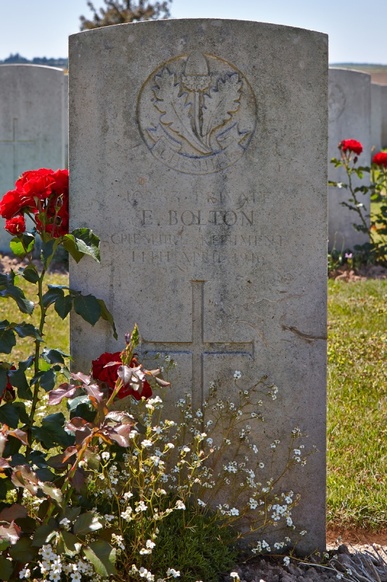
Picture © Geerhard Joos
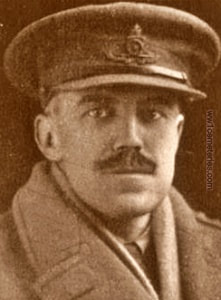
Major
Philip Gerald Bailey
36th Bde. Royal Field Artillery
26th April 1917, aged 31.
Plot I. C. 3.
Son of Mrs. L. F. Bailey, of 11, Herne Hill Mansions, Herne Hill, London, and the late Doctor J. B. Bailey. Born at Bognor, Sussex.
His headstone bears the inscription; "These Laid The World Away Poured Out The Red Sweet Wine Of Youth."
Philip Gerald Bailey
36th Bde. Royal Field Artillery
26th April 1917, aged 31.
Plot I. C. 3.
Son of Mrs. L. F. Bailey, of 11, Herne Hill Mansions, Herne Hill, London, and the late Doctor J. B. Bailey. Born at Bognor, Sussex.
His headstone bears the inscription; "These Laid The World Away Poured Out The Red Sweet Wine Of Youth."
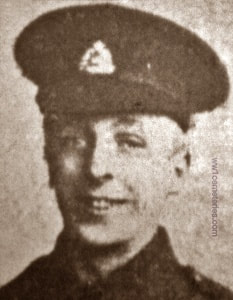
43398 Lance Corporal
Henry Goldsmith Balls
11th Bn. Suffolk Regiment
9th April 1917, aged 19.
Plot IV. A. 11.
Son of Henry Goldsmith Balls and Elizabeth Balls, of 21, Alma Rd., Lowestoft.
Henry Goldsmith Balls
11th Bn. Suffolk Regiment
9th April 1917, aged 19.
Plot IV. A. 11.
Son of Henry Goldsmith Balls and Elizabeth Balls, of 21, Alma Rd., Lowestoft.
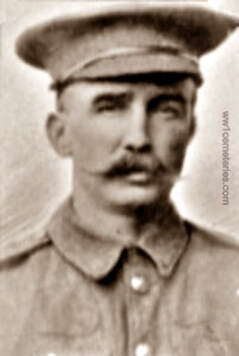
20/371 Private
Thomas Spark Batey
20th (Tyneside Scottish) Bn. Northumberland Fusiliers
9th April 1917.
Sp. Mem. A. 1.
His headstone bears the inscription; "Their Glory Shall Not Be Blotted Out."
Thomas Spark Batey
20th (Tyneside Scottish) Bn. Northumberland Fusiliers
9th April 1917.
Sp. Mem. A. 1.
His headstone bears the inscription; "Their Glory Shall Not Be Blotted Out."
TZ/411 Able Seaman
William Brown
Hood Bn. R.N. Div. Royal Naval Volunteer Reserve
20th April 1917, aged 30.
Plot IV. G. 1.
Son of Mrs. Hannah Graham, of 12, Turnbull Terrace, Springwell, Gateshead.
William Brown
Hood Bn. R.N. Div. Royal Naval Volunteer Reserve
20th April 1917, aged 30.
Plot IV. G. 1.
Son of Mrs. Hannah Graham, of 12, Turnbull Terrace, Springwell, Gateshead.
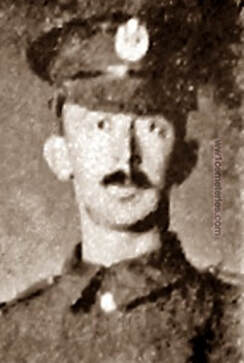
47783 Private
Frederick J. Castle
20th (Tyneside Scottish) Bn. Northumberland Fusiliers
9th April 1917.
Plot II. A. 8.
Frederick J. Castle
20th (Tyneside Scottish) Bn. Northumberland Fusiliers
9th April 1917.
Plot II. A. 8.
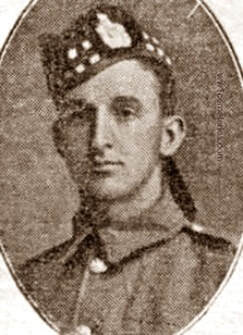
25398 Private
William Clingan
6th Bn. King's Own Scottish Borderers
9th April 1917, aged 24.
Plot IV. D. 18.
Son of John and Agnes Jane Clingan, of Mill House, New Abbey, Kirkcudbrightshire.
His headstone bears the inscription; "He Died Beloved By All."
William Clingan
6th Bn. King's Own Scottish Borderers
9th April 1917, aged 24.
Plot IV. D. 18.
Son of John and Agnes Jane Clingan, of Mill House, New Abbey, Kirkcudbrightshire.
His headstone bears the inscription; "He Died Beloved By All."
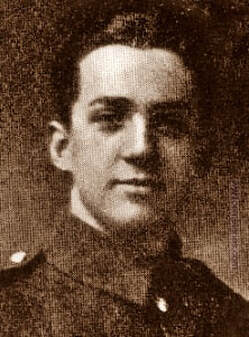
350466 Serjeant
James Doig
9th Bn. Royal Scots
9th April 1917.
Plot II. H. 2.
James Doig
9th Bn. Royal Scots
9th April 1917.
Plot II. H. 2.
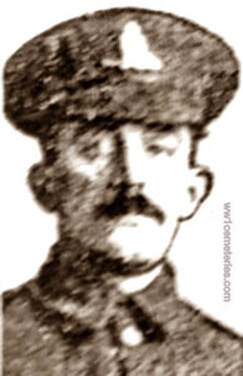
47678 Private
Richard Edwards
23rd (Tyneside Scottish) Bn. Northumberland Fusiliers
9th April 1917, aged 29.
Plot II. C. 2.
Son of John and Mary Edwards of Bootle. Husband of Bessie Edwards of Bootle. His brother George Edwards also fell and is buried at Douai Communal Cemetery.
Richard Edwards
23rd (Tyneside Scottish) Bn. Northumberland Fusiliers
9th April 1917, aged 29.
Plot II. C. 2.
Son of John and Mary Edwards of Bootle. Husband of Bessie Edwards of Bootle. His brother George Edwards also fell and is buried at Douai Communal Cemetery.
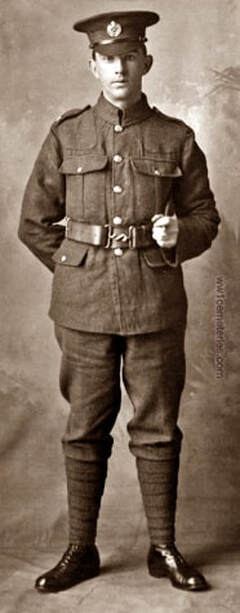
40861 Private
William Victor Forteath
22nd (Tyneside Scottish) Bn. Northumberland Fusiliers
9th April 1917.
Plot III. F. 7.
Son of Mr. W. Forteath, of "Roclincourt," Culver Rd., Shanklin, Isle of Wight.
His headstone bears the inscription; "Rest After Duty Well Done."
William Victor Forteath
22nd (Tyneside Scottish) Bn. Northumberland Fusiliers
9th April 1917.
Plot III. F. 7.
Son of Mr. W. Forteath, of "Roclincourt," Culver Rd., Shanklin, Isle of Wight.
His headstone bears the inscription; "Rest After Duty Well Done."
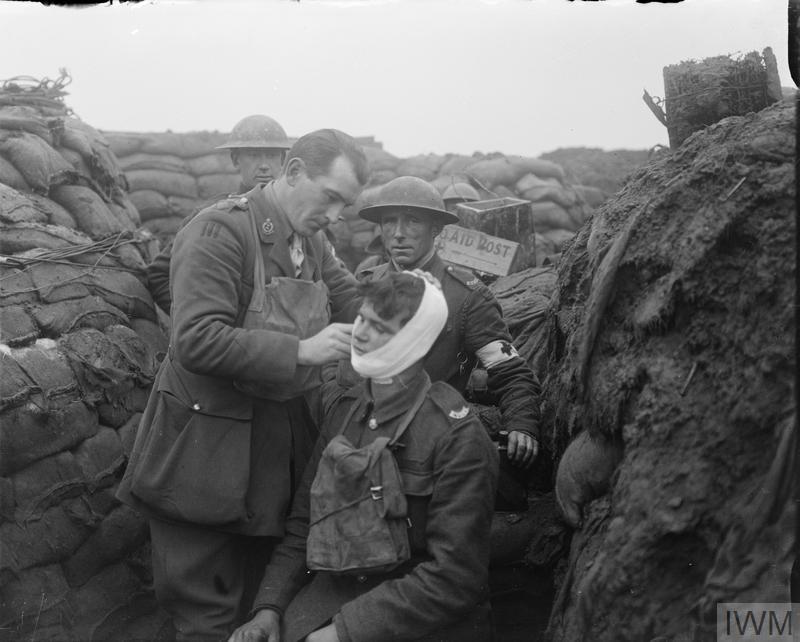
The RAMC officer, attached to the 12th Battalion, East Yorkshire Regiment (92nd Brigade, 31st Division), bandaging the face wound of a man of his battalion in the line in the Arleux sector, near Roclincourt, 9 January 1918. © IWM (Q 11545)
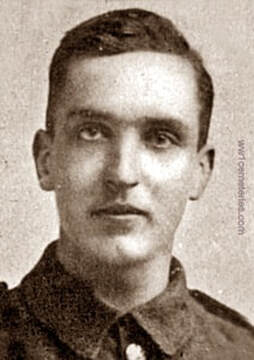
350731 Corporal
Ian Dalgleish Gowan
"B" Coy. 1st/9th Bn. Royal Scots
9th April 1917, aged 19.
Plot II. H. 17.
Son of John and Margaret Gowan, of 20, Blackford Rd., Edinburgh.
His headstone bears the inscription; "Faithful Unto Death."
Ian Dalgleish Gowan
"B" Coy. 1st/9th Bn. Royal Scots
9th April 1917, aged 19.
Plot II. H. 17.
Son of John and Margaret Gowan, of 20, Blackford Rd., Edinburgh.
His headstone bears the inscription; "Faithful Unto Death."
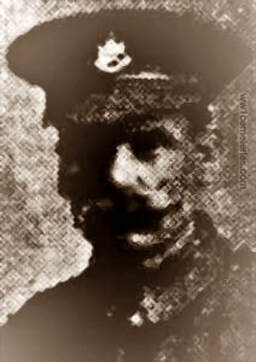
27812 Private
Charles Henry Jackson
15th Bn. Sherwood Foresters (Notts and Derby Regiment)
2nd November 1916.
Plot IV. F. 6.
Charles Henry Jackson
15th Bn. Sherwood Foresters (Notts and Derby Regiment)
2nd November 1916.
Plot IV. F. 6.
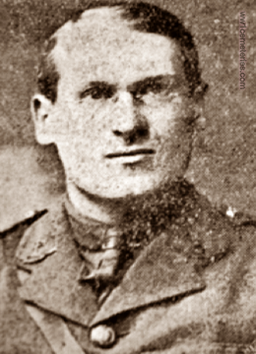
Second Lieutenant
Owen Bennett Goold Johnson
11th Bn. Suffolk Regiment
9th April 1917, aged 28.
Plot IV. A. 5.
Son of Richard Alexander and Eliza Bennett Johnson, of 40, Church St., Saffron Walden, Essex. His brother Donald Frederic Goold Johnson also fell and is buried at Bouzincourt Communal Cemetery Extension.
His headstone bears the inscription; "Dearly Loved Son."
Owen Bennett Goold Johnson
11th Bn. Suffolk Regiment
9th April 1917, aged 28.
Plot IV. A. 5.
Son of Richard Alexander and Eliza Bennett Johnson, of 40, Church St., Saffron Walden, Essex. His brother Donald Frederic Goold Johnson also fell and is buried at Bouzincourt Communal Cemetery Extension.
His headstone bears the inscription; "Dearly Loved Son."
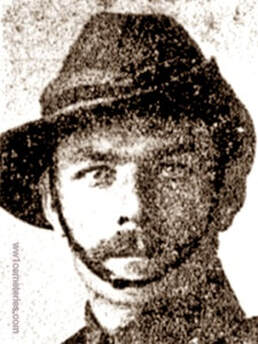
4/1511 Sapper
James King
New Zealand Engineers
15th August 1916, aged 31.
Plot IV. F. 5.
Husband of Julia Frances King, of 4, Forth St., Dunedin West, New Zealand. Native of Westland, New Zealand.
James King
New Zealand Engineers
15th August 1916, aged 31.
Plot IV. F. 5.
Husband of Julia Frances King, of 4, Forth St., Dunedin West, New Zealand. Native of Westland, New Zealand.
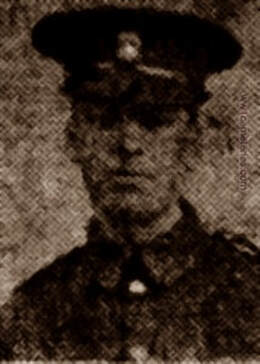
37412 Private
Leslie Lemon
20th (Tyneside Scottish) Bn. Northumberland Fusiliers
9th April 1917, aged 22.
Sp. Mem. A. 2.
Son of James Lemon, of New Westwood, Jacksdale, Notts.
His headstone bears the inscription; "Their Glory Shall Not Be Blotted Out."
Leslie Lemon
20th (Tyneside Scottish) Bn. Northumberland Fusiliers
9th April 1917, aged 22.
Sp. Mem. A. 2.
Son of James Lemon, of New Westwood, Jacksdale, Notts.
His headstone bears the inscription; "Their Glory Shall Not Be Blotted Out."

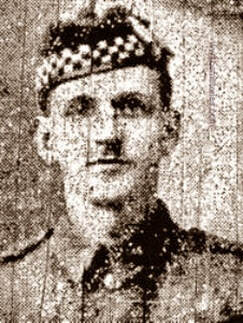
Second Lieutenant
Robert Archibald MacNeill
21st (Tyneside Scottish) Bn. Northumberland Fusiliers
9th April 1917, aged 24.
Plot III. F. 4.
Son of Neil and Agnes MacNeill, of 27, Wilson St., Beith, Ayrshire.
His headstone bears the inscription; "In Hope Of Eternal Life."
Robert Archibald MacNeill
21st (Tyneside Scottish) Bn. Northumberland Fusiliers
9th April 1917, aged 24.
Plot III. F. 4.
Son of Neil and Agnes MacNeill, of 27, Wilson St., Beith, Ayrshire.
His headstone bears the inscription; "In Hope Of Eternal Life."
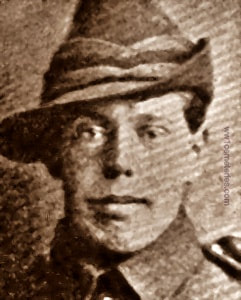
4/1526 Sapper
Joseph McCullum
New Zealand Engineers
15th August 1916, aged 23.
Plot IV. F. 4.
Son of Andrew and Jessie McCallum, of Rotowaro, Huntly, New Zealand. Native of Leven, Scotland.
Joseph McCullum
New Zealand Engineers
15th August 1916, aged 23.
Plot IV. F. 4.
Son of Andrew and Jessie McCallum, of Rotowaro, Huntly, New Zealand. Native of Leven, Scotland.
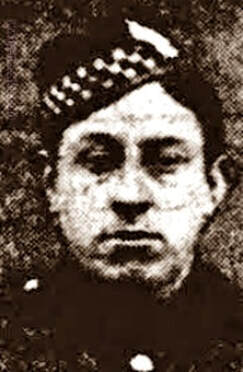
252714 Private
Donald McClellan
1st/6th Bn. Argyll and Sutherland Highlanders
8th May 1917, aged 20.
Plot I. D. 6.
Son of John and Elizabeth McLellan, of Summerston Cottages, Maryhill, Glasgow.
His headstone bears the inscription; "Sleep On Beloved."
Donald McClellan
1st/6th Bn. Argyll and Sutherland Highlanders
8th May 1917, aged 20.
Plot I. D. 6.
Son of John and Elizabeth McLellan, of Summerston Cottages, Maryhill, Glasgow.
His headstone bears the inscription; "Sleep On Beloved."
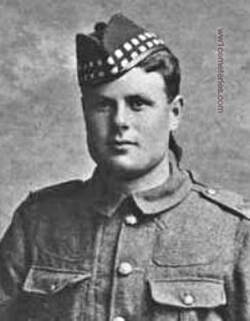
265117 Corporal
William Milne
1st/6th Bn. Gordon Highlanders
9th April 1917.
Plot II. F. 3.
William Milne
1st/6th Bn. Gordon Highlanders
9th April 1917.
Plot II. F. 3.
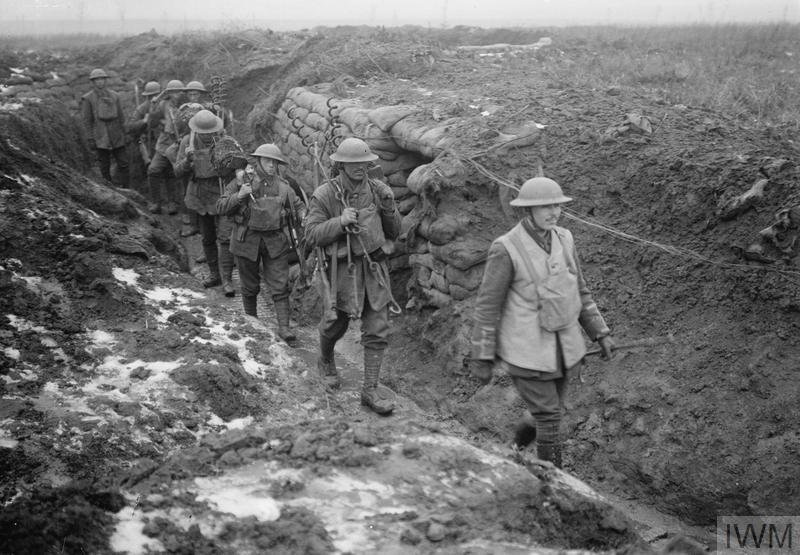
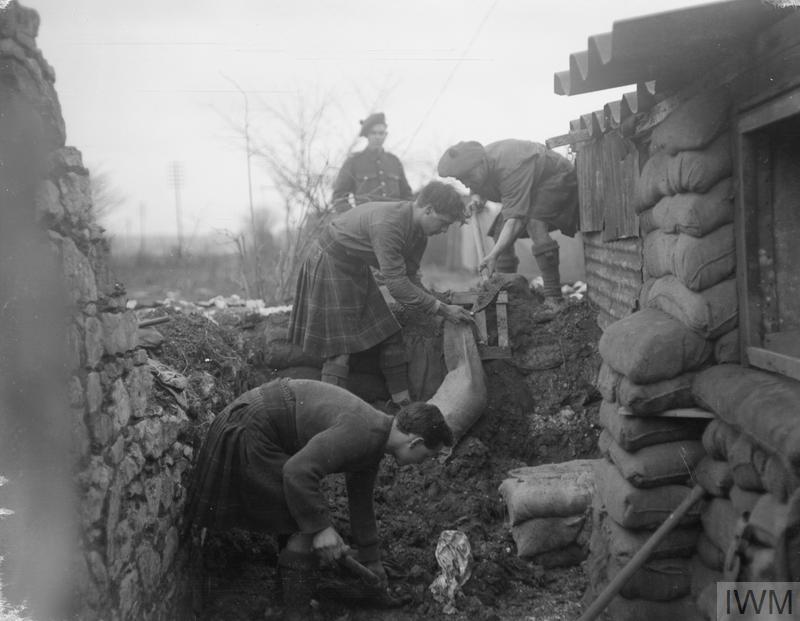
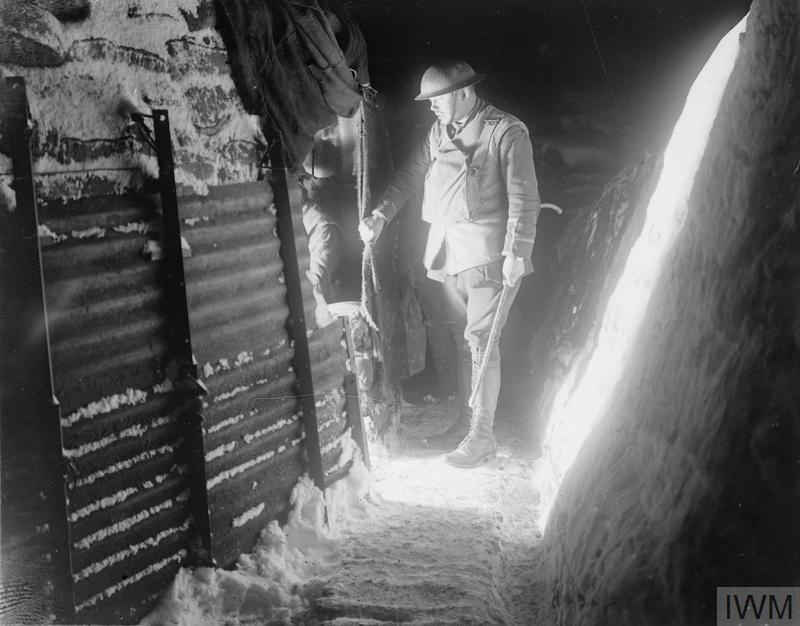
A wiring party of the 12th Battalion, East Yorkshire Regiment, 31st Division, passing along a communication trench near Roclincourt, January 1918. © IWM (Q 10611)
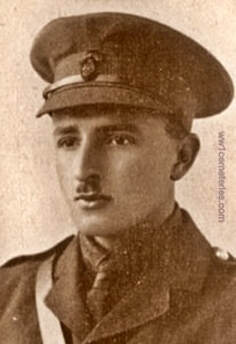
Second Lieutenant
Arthur James Probert
25th (Tyneside Scottish) Bn. Northumberland Fusiliers
9th April 1917, aged 23.
Plot II. C. 11.
Son of James and Louisa Kate Probert, of "The Beeches," Sherwood Park Rd., Sutton. Surrey.
His headstone bears the inscription; "Earth Changes But Thy Soul & God Stand Sure."
Arthur James Probert
25th (Tyneside Scottish) Bn. Northumberland Fusiliers
9th April 1917, aged 23.
Plot II. C. 11.
Son of James and Louisa Kate Probert, of "The Beeches," Sherwood Park Rd., Sutton. Surrey.
His headstone bears the inscription; "Earth Changes But Thy Soul & God Stand Sure."
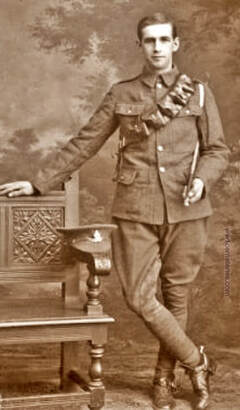
128564 Gunner
Arthur Edwin Prowse
11th Bty. 165th Bde. Royal Field Artillery
15th April 1917, aged 28.
Plot IV. B. 15.
Son of Caroline Prowse, of 26, Alington Rd., Fordington, Dorchester, and the late Robert Prowse.
His headstone bears the inscription; "In Memory Ever Dear."
Arthur Edwin Prowse
11th Bty. 165th Bde. Royal Field Artillery
15th April 1917, aged 28.
Plot IV. B. 15.
Son of Caroline Prowse, of 26, Alington Rd., Fordington, Dorchester, and the late Robert Prowse.
His headstone bears the inscription; "In Memory Ever Dear."
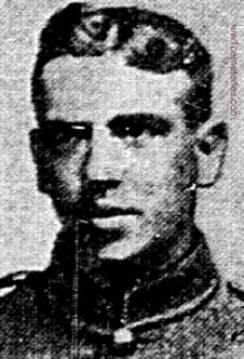
38984 Private
Fred Swaine
21st (Tyneside Scottish) Bn. Northumberland Fusiliers
9th April 1917.
Plot IV. A. 15.
Fred Swaine
21st (Tyneside Scottish) Bn. Northumberland Fusiliers
9th April 1917.
Plot IV. A. 15.
Images in this gallery © Werner Van Caneghem




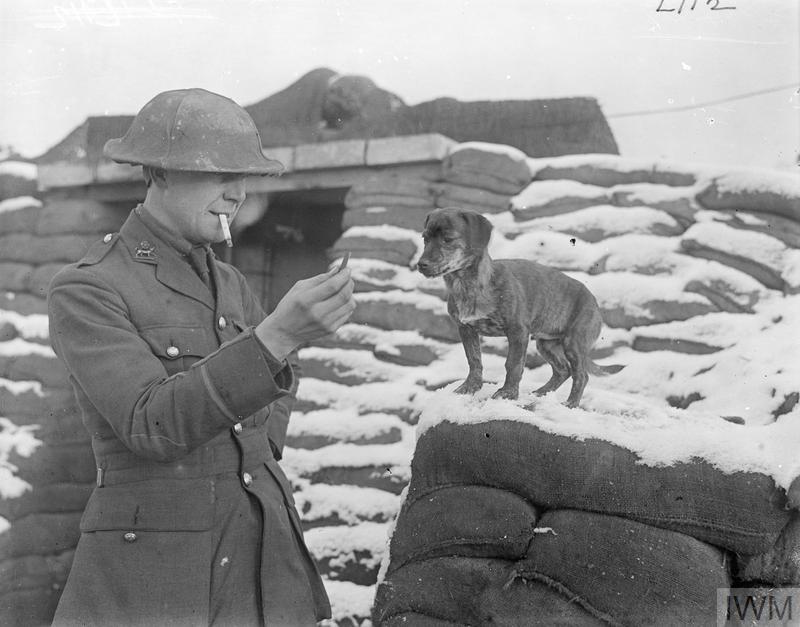
An officer York and Lancaster Regiment, probably 2/4th Battalion part of 187th Brigade, feeds a puppy outside a reinforced dugout in a trench near Roclincourt, on the 62nd Division front between Oppy and Gavrelle, 13 January, 1918. © IWM (Q 8439)